विश्व में भारत · ವಿಶ್ವದಲ್ಲಿ ಭಾರತ — India's arts across the world
For more than a thousand years, India's stories, scripts, deities and dances
travelled outward — by monsoon ship to Southeast Asia, along the Silk Road to
China and Japan, and in the memories of indentured labourers crossing three
oceans. This page follows those journeys, to places where India's arts are
not a memory but a living practice — often under names their Indian cousins
would barely recognise.
❖ ❖ ❖
The Monsoon World — Southeast Asia
Where the Ramayana became a national epic — several times over.
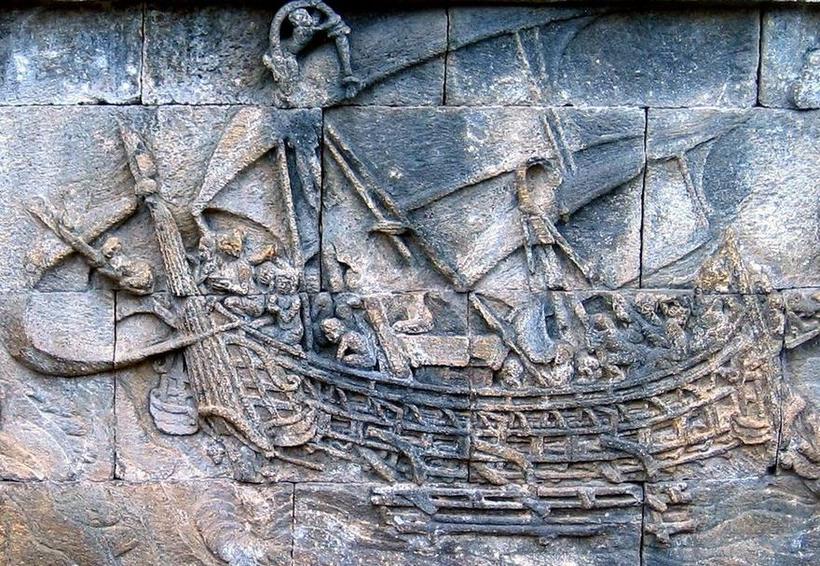
A merchant ship of the monsoon trade, carved in the 9th century at Borobudur, Java — vessels like these carried India’s stories, scripts and gods across the seas. Image: Wikimedia Commons · more: the Borobudur ship
Ramakien & Khon Thailand
ThailandMasked dance-dramaLiving royal tradition
Thailand's national epic, the Ramakien, is the Ramayana —
retold with Thai names, landscapes and courtly manners. Its kings carry the
title Rama to this day, and the old royal capital
Ayutthaya takes its name from Ayodhya. The epic lives on
stage in Khon, a masked dance-drama of codified gestures,
glittering crowns and a narrating chorus — a court art once reserved for
royalty, now a national treasure recognised by UNESCO.
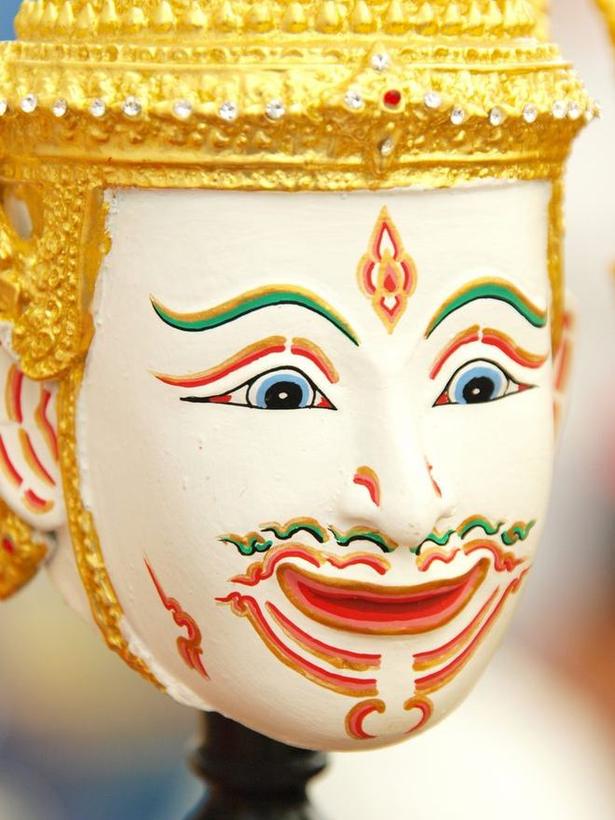
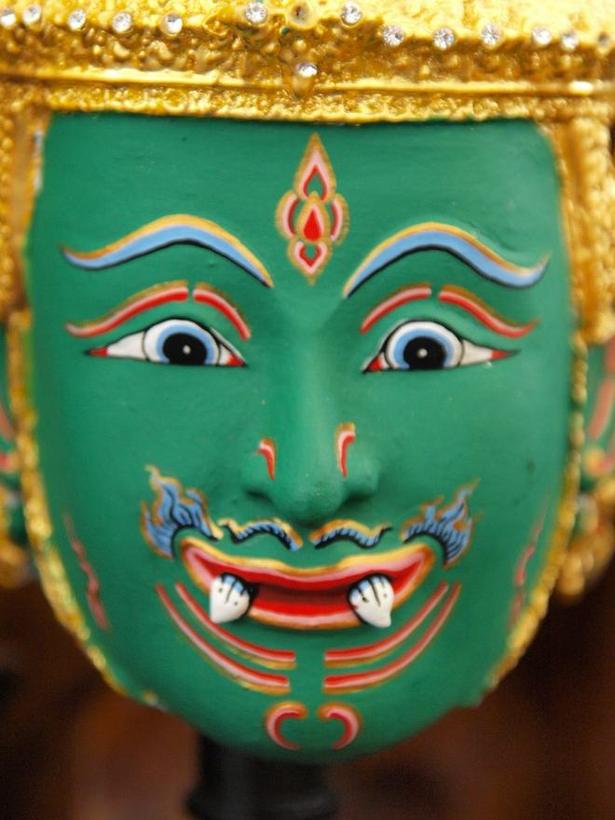
A Khon mask — in Thai masked theatre, colour, crown and expression encode exactly who each character is. Image: Wikimedia Commons · more: KhonA green Khon mask with fangs — the painted conventions let the audience read hero, demon or monkey at a glance. Image: Wikimedia Commons · more: Khon
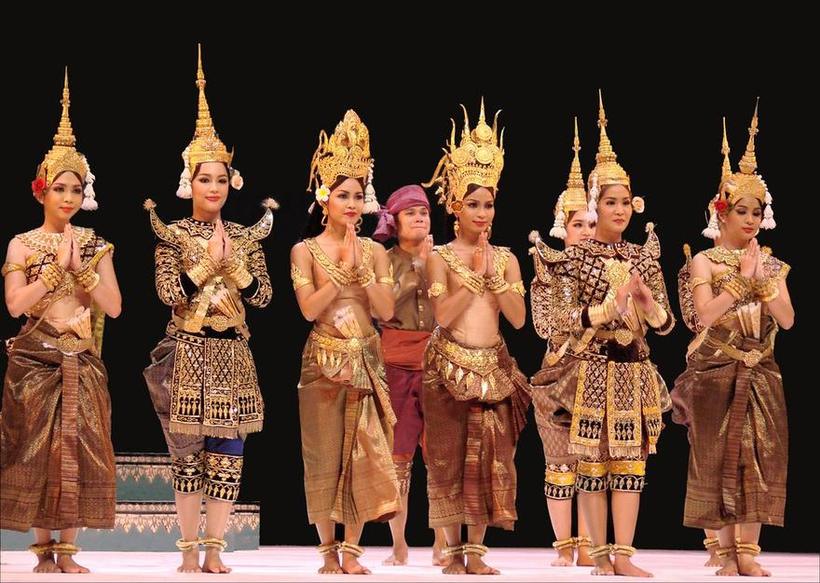
Reamker & the Apsara Dance Cambodia
CambodiaClassical dance-drama
Angkor Wat — the largest religious monument on earth —
was raised in the 12th century as a temple to Vishnu. Its
walls carry one of the world's great carved Ramayanas, and Cambodia's own
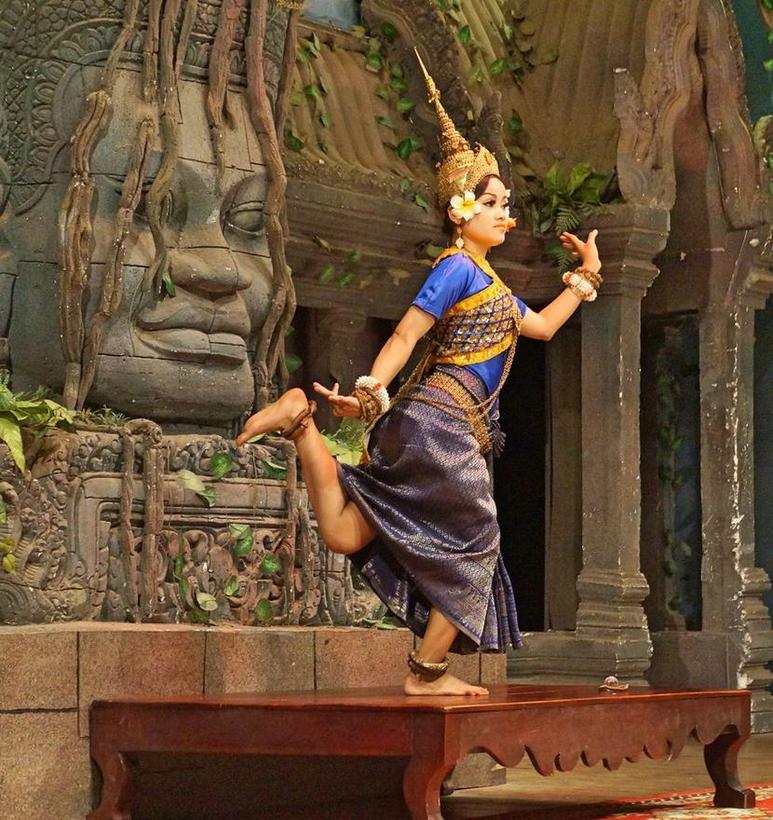
telling, the Reamker, is danced by the Royal Ballet in the
slow, curving apsara style whose poses mirror the celestial dancers carved
on the temple walls. The tradition survived even the darkest years of
Cambodia's history — teachers rebuilt it from memory.
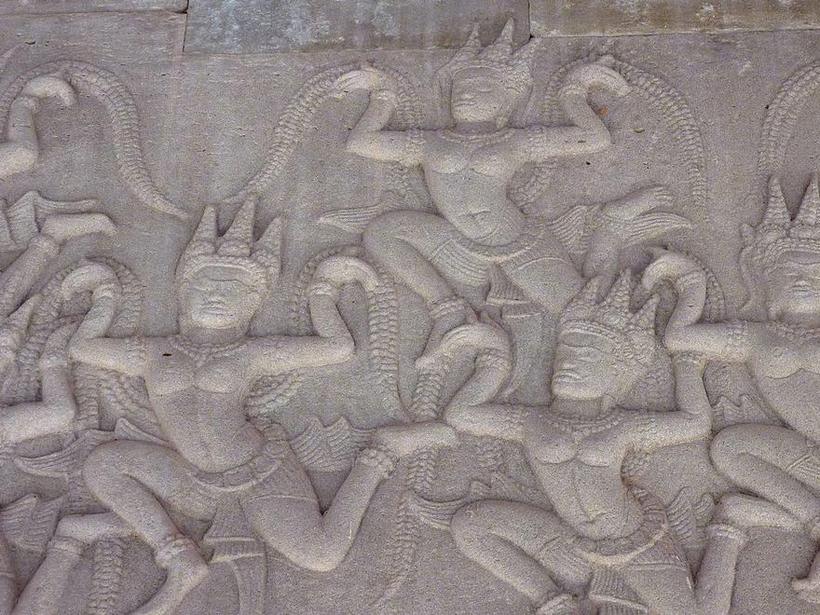
Gods gripping the great serpent — the Churning of the Ocean of Milk, carved on the walls of Angkor Wat. Image: Wikimedia Commons · more: Angkor WatThe Royal Ballet of Cambodia — the dance rebuilt from memory after the nation’s darkest years. Image: Wikimedia Commons · more: the Royal BalletThe apsara style — slow, curving poses mirroring the celestial dancers on the temple walls. Image: Wikimedia Commons · more: apsaras
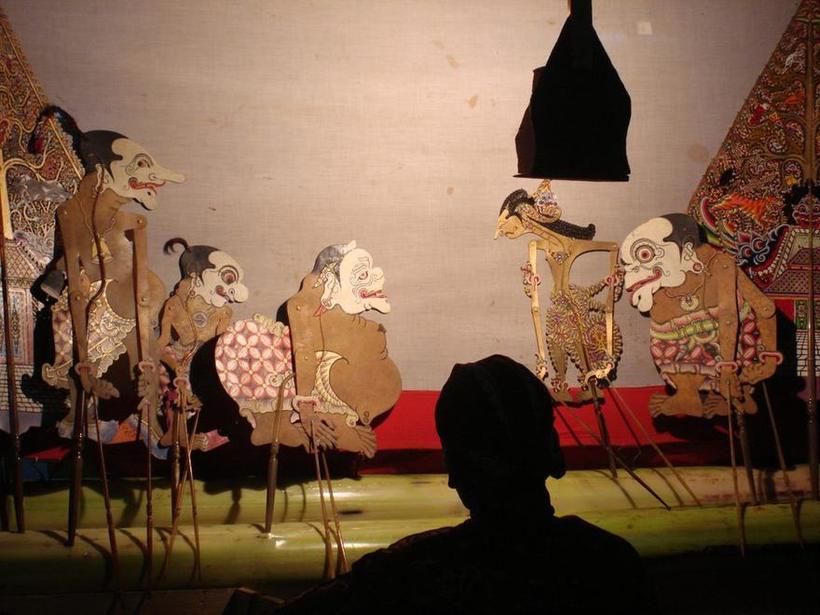
In the world's most populous Muslim-majority nation, the all-night shadow
theatre wayang kulit still stages the
Mahabharata and Ramayana — a startling
cousin of Karnataka's own Togalu Gombeyaata. At the 9th-century
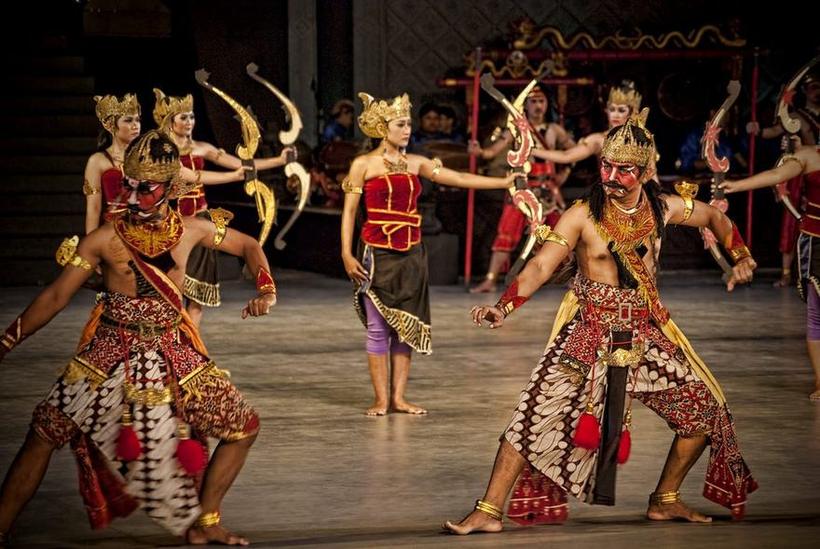
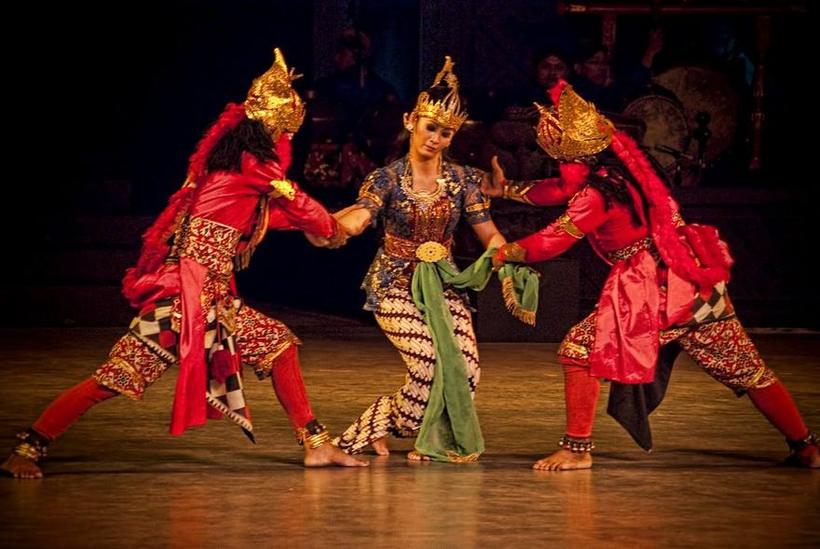
Prambanan temple in Java, the Ramayana ballet is performed
against the lit spires; and in Hindu Bali, the
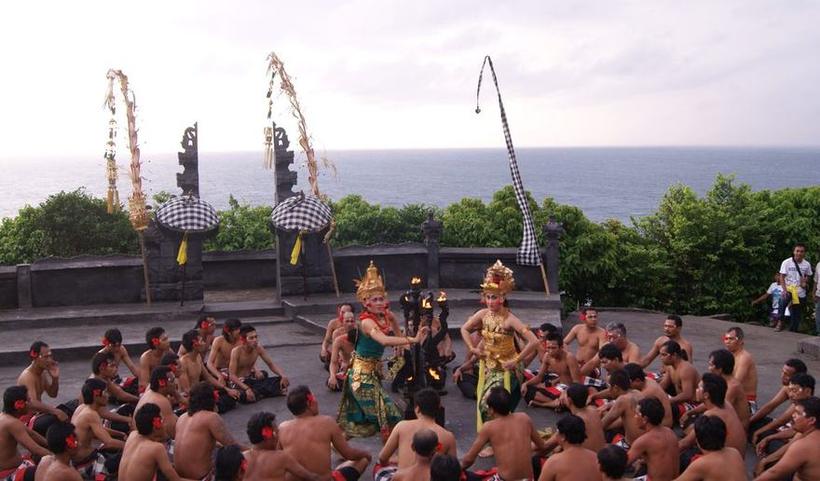
Kecak — a modern form built on an older trance-chant
chorus — enacts Hanuman's burning of Lanka with a hundred voices for an
orchestra. Even the word bahasa ("language") is Sanskrit
bhāṣā.
The dalang (puppeteer) at his screen — an all-night wayang kulit performance from the puppeteer’s side. Image: Wikimedia Commons · more: wayang kulitThe Ramayana ballet — Rama’s army meets the demons of Lanka on the Javanese stage. Image: Wikimedia Commons · more: Prambanan
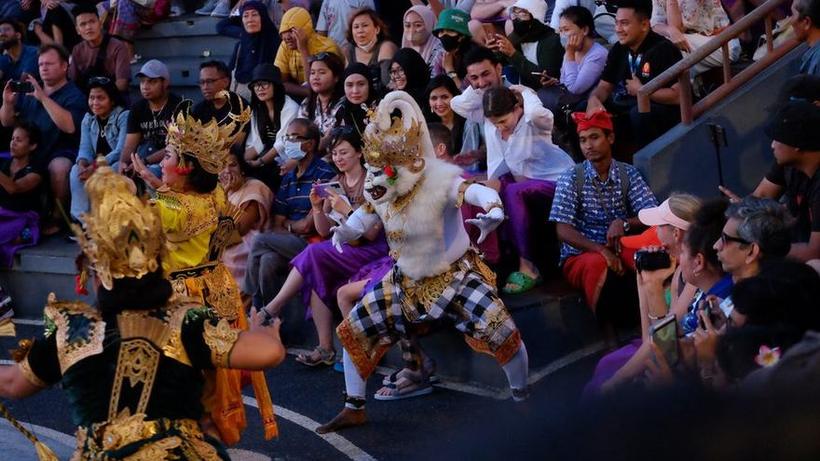
Kecak at the cliff-temple of Uluwatu, Bali — a hundred seated voices are the orchestra. Image: Wikimedia Commons · more: KecakHanuman arrives through the audience — in Bali’s Ramayana performances the monkey god walks among the watchers. Image: Wikimedia Commons · more: HanumanSita and the demons — the Javanese telling keeps every twist of the story Indian children know. Image: Wikimedia Commons · more: the Ramayana
The Other Ramayanas Myanmar · Laos · Malaysia
Mainland Southeast AsiaDance-drama · puppetry
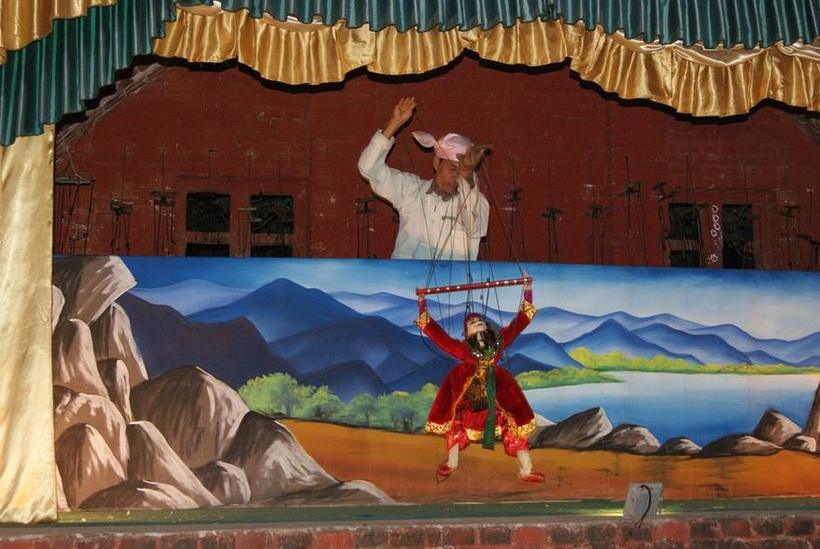
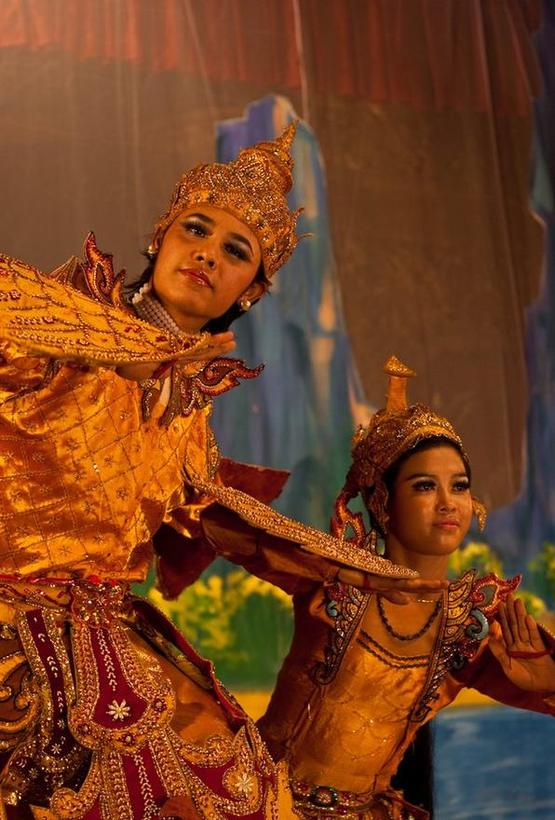
Myanmar dances the Yama Zatdaw; Laos tells
Phra Lak Phra Ram; Malaysia's wayang and its great
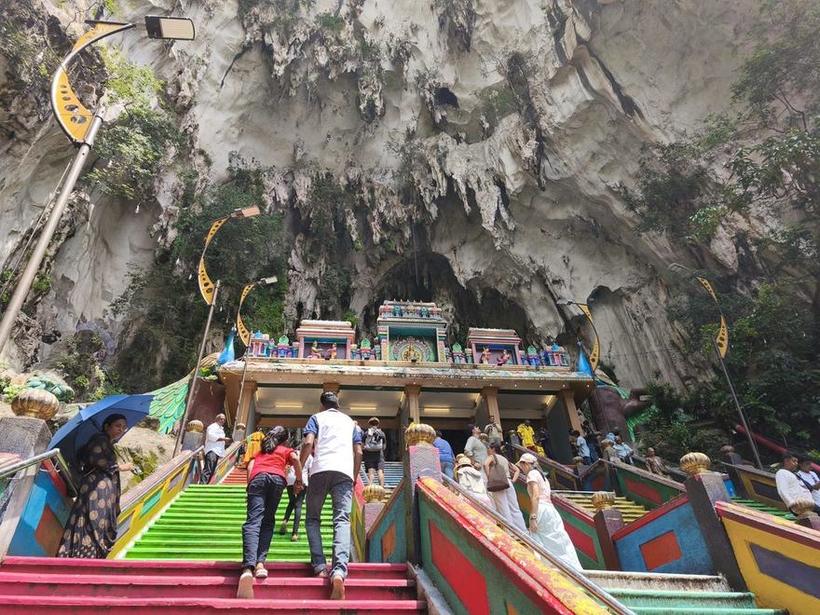
Thaipusam festival at the Batu Caves carry Indian threads
into the present. Across the region, the scripts themselves are Indian
descendants: Thai, Khmer, Burmese, Lao, Javanese and Balinese letters all
trace back to Brahmi through the Pallava script of South
India — every written word a quiet inheritance.
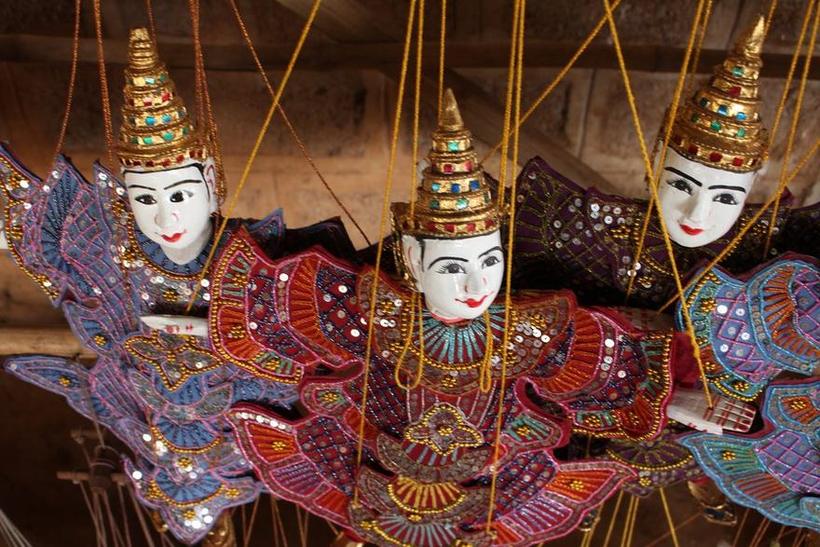
A Yoke thé marionettist of Myanmar — the royal puppet theatre that staged the Yama Zatdaw. Image: Wikimedia Commons · more: Yoke théMarionettes at rest — carved, gilded and strung for the Burmese stage. Image: Wikimedia Commons · more: Yoke théBurmese classical dancers — the courtly style that carries the Yama Zatdaw. Image: Wikimedia Commons · more: Yama Zatdaw
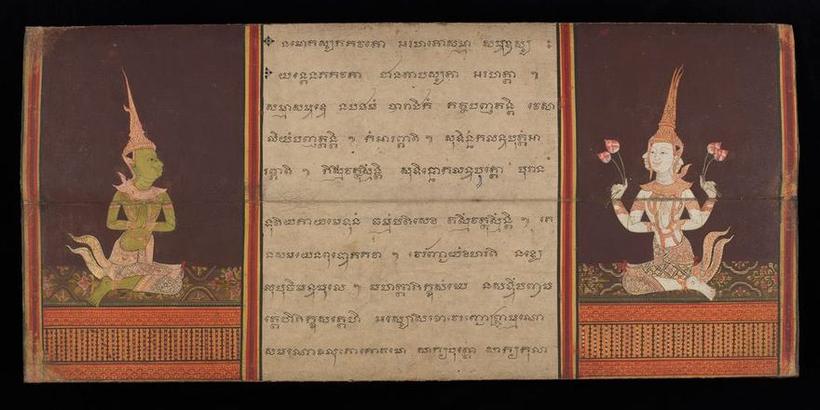
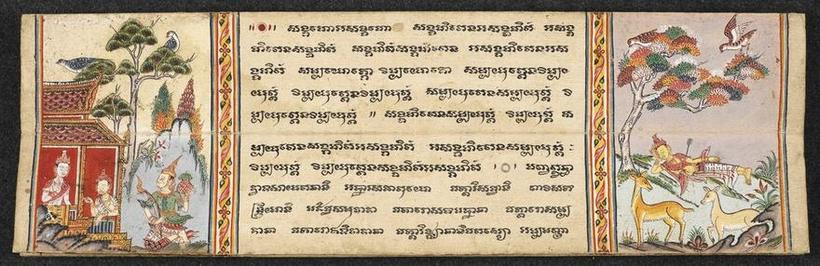
A Southeast Asian folding-book manuscript — celestial figures above a script descended, letter by letter, from India’s Brahmi. Image: Wikimedia Commons · more: the Khom scriptAnother folding-book leaf — palace, forest and deer painted beside flowing Indian-descended letters. Image: Wikimedia Commons · more: folding books
The rainbow steps of Batu Caves, Malaysia — where the Thaipusam festival draws over a million devotees. Image: Wikimedia Commons · more: Batu Caves
The Buddhist Highway — Central Asia to Japan
Indian art rode the Silk Road for a millennium.
Cave Murals & Thangkas China · Tibet
Silk Road · HimalayaPainting
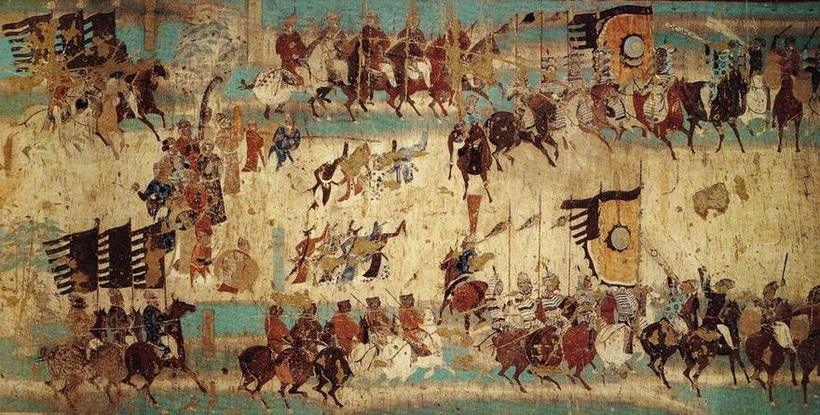
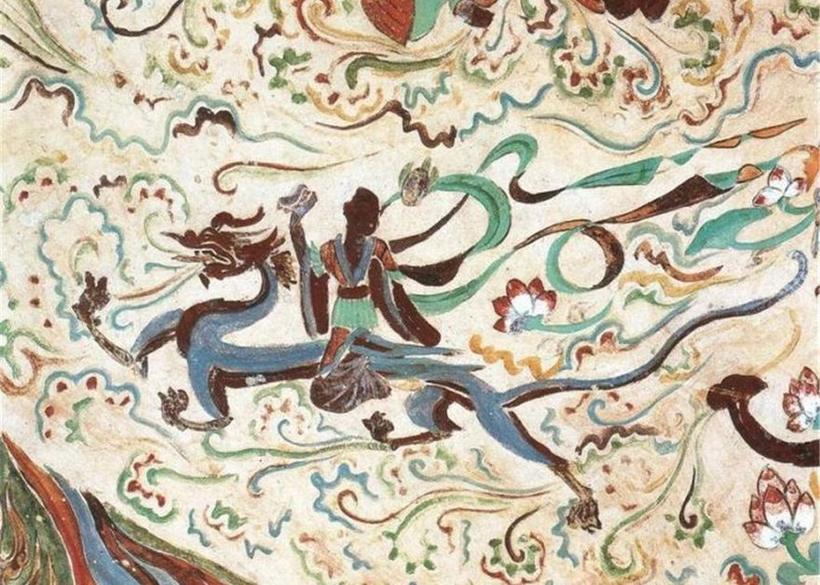
The painted caves of Dunhuang in China belong to a mural
lineage that reaches back through Central Asia toward
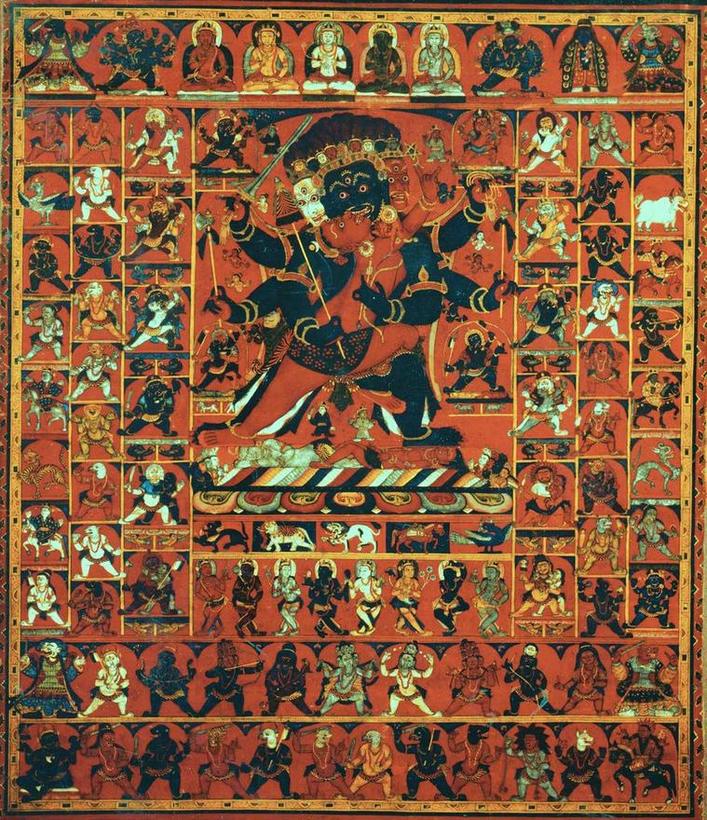
Ajanta; and Tibet's thangka painting
preserves the iconographic grammar carried north from the monasteries of
Nalanda. Tradition also holds that
Bodhidharma, a monk from South India, carried the seed of
what became Chan (Zen) — and, legend says, the Shaolin arts.
A mural from the Mogao caves, Dunhuang — the painted-cave tradition that reaches back toward Ajanta. Image: Wikimedia Commons · more: the Mogao CavesA flying celestial (feitian) at Dunhuang — cousin of the flying apsaras of Indian cave art. Image: Wikimedia Commons · more: the Mogao Caves
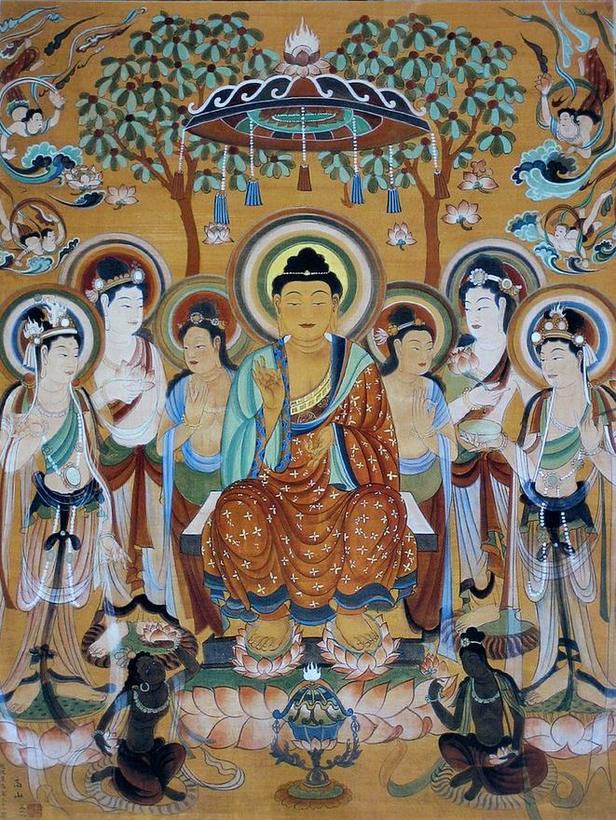
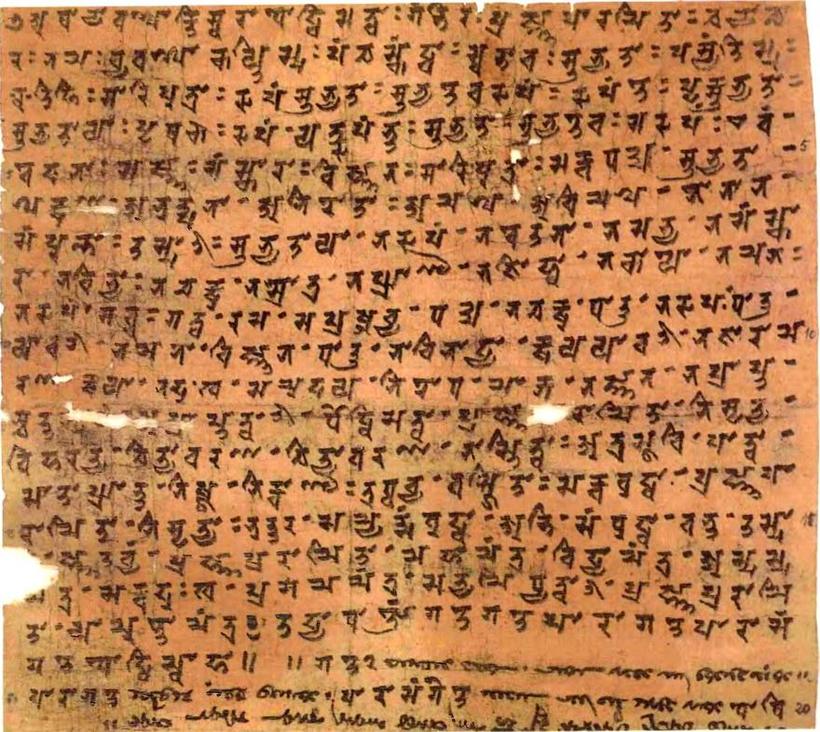
The Buddha preaching, in the Dunhuang style — Indian iconography in Central Asian dress. Image: Wikimedia Commons · more: Buddhism on the Silk RoadA Sanskrit Buddhist manuscript — texts like this travelled the Silk Road for a thousand years. Image: Wikimedia Commons · more: the Silk Road transmissionA Himalayan sacred painting — the iconographic grammar carried north from India’s monasteries. Image: Wikimedia Commons · more: thangkas
Saraswati in Japan Japan
JapanLiving temple tradition
Walk into certain Japanese temples today and you meet Indian deities under
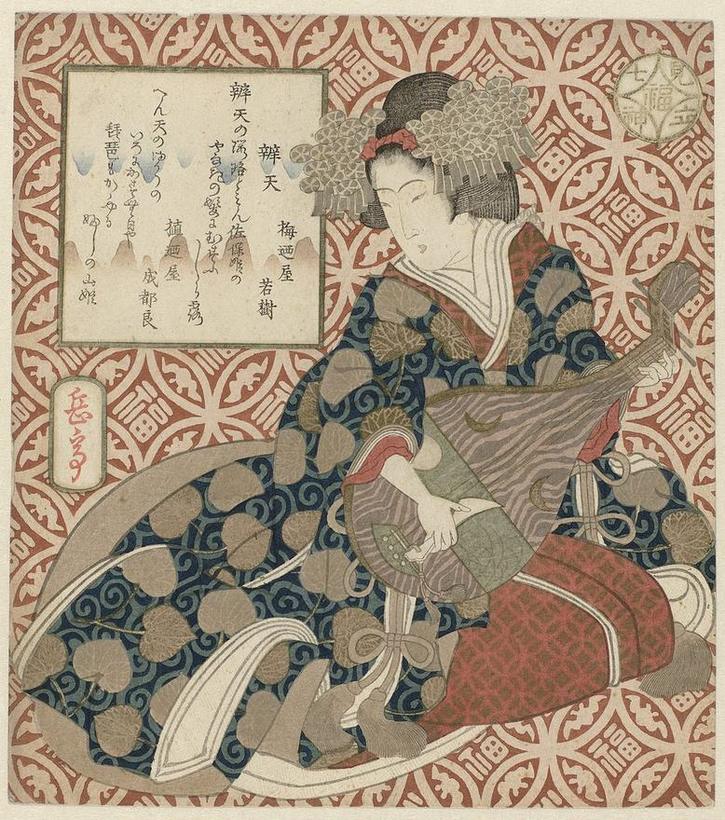
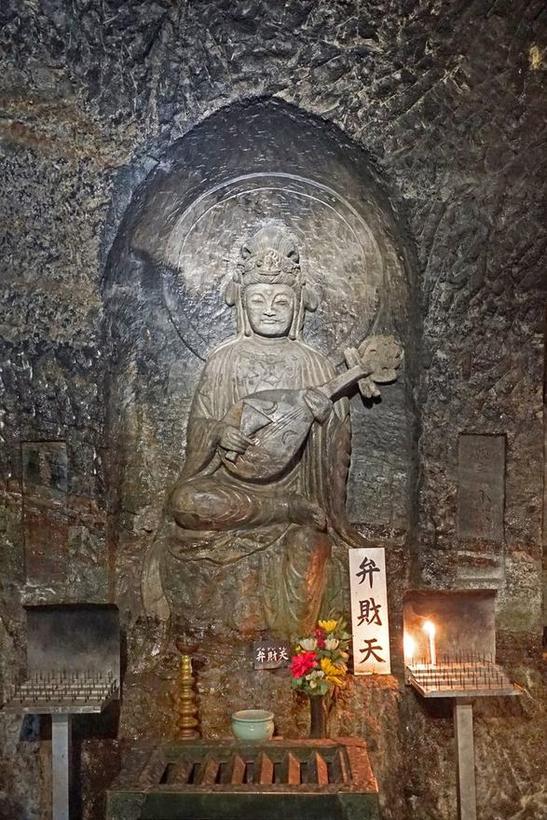
Japanese names: Benzaiten is Saraswati,
still holding her stringed instrument (a biwa in place of the
veena); Bishamonten descends from Vaishravana-Kubera. Some
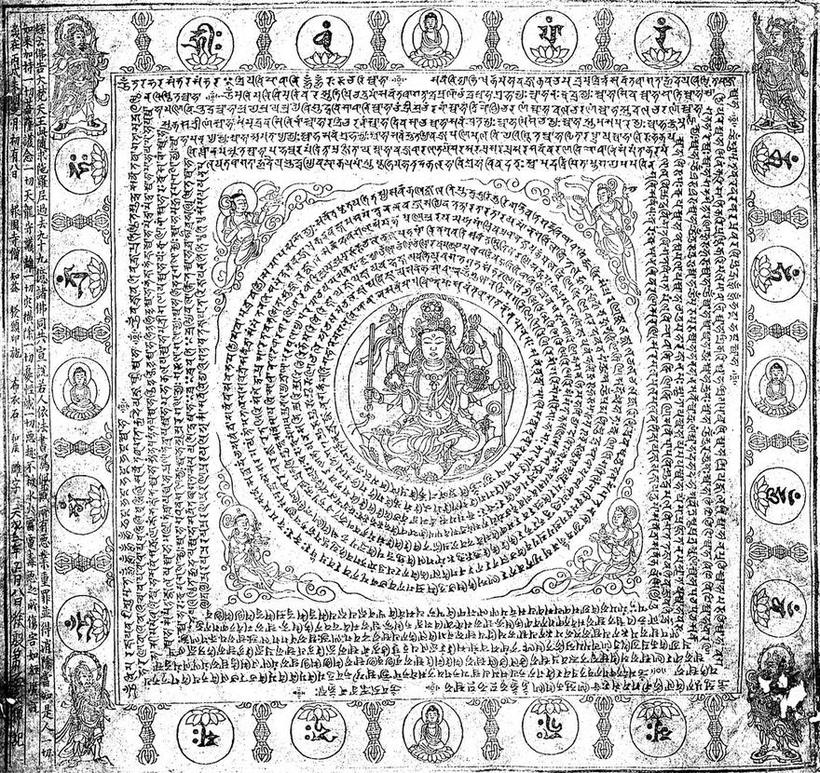
Shingon Buddhist temples still preserve Sanskrit syllables in the ancient
Siddham script, copied faithfully for over a thousand
years — Sanskrit calligraphy alive in Japan long after it faded from
Indian daily use.
Benzaiten with her biwa, in a 19th-century Japanese woodblock print — Saraswati, five thousand kilometres from home. Image: Wikimedia Commons · more: BenzaitenA Benzaiten rock shrine (the sign reads 弁財天) — flowers and candles still offered to the goddess of music. Image: Wikimedia Commons · more: BenzaitenA printed Buddhist dharani — Sanskrit syllables in Siddham script, preserved in East Asian devotion. Image: Wikimedia Commons · more: the Siddham script
Across Three Oceans — the Girmitiya World
What indentured labourers carried in memory, their descendants still perform.
Ramleela in the Caribbean Trinidad · Guyana · Suriname
CaribbeanOpen-air community theatre150+ years unbroken
From the 1840s, ships carried indentured labourers — mostly from the
Bhojpuri belt — to the sugar colonies. They carried the Ramayana in memory,
and their descendants in Trinidad, Guyana and Suriname have
staged open-air Ramleela ever since: community-cast,
village-ground theatre, much as in eastern Uttar Pradesh. The Nobel laureate
poet Derek Walcott opened his 1992 Nobel lecture with the
Ramleela of Felicity, Trinidad — art he called not a ruin of memory but a
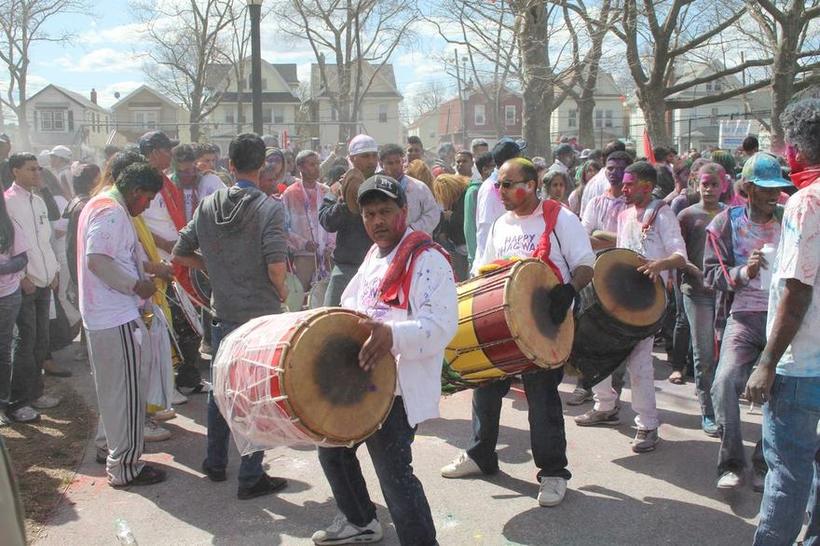
living renewal. Their music, chutney, grew from Bhojpuri
folk song into a Caribbean genre of its own.
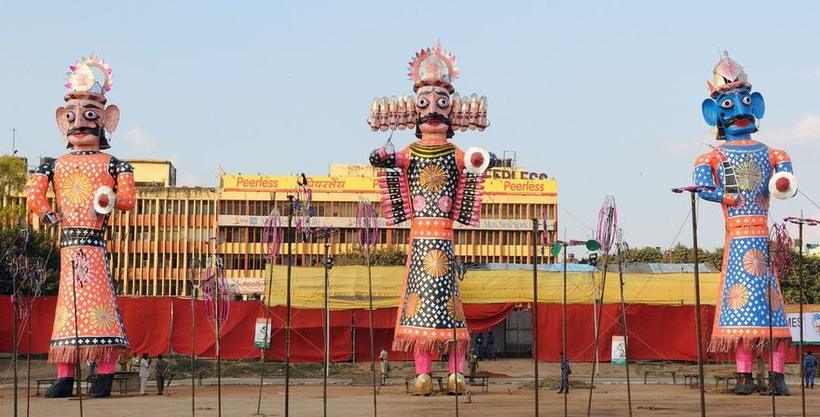
Giant Ramlila effigies await Dussehra in India — the parent tradition the girmitiyas carried across the oceans. Image: Wikimedia Commons · more: RamlilaPhagwah (Holi) drummers in New York’s Indo-Caribbean community — Bhojpuri drums, five generations from Bhojpur. Image: Wikimedia Commons · more: Indo-Caribbean culture
Fiji, Mauritius & Beyond Indian Ocean · Pacific · Africa
Fiji · Mauritius · South Africa · RéunionLiving community traditions
The same indenture-era journeys planted enduring traditions in
Fiji, Mauritius (where Bhojpuri is still
spoken and sung), South Africa and Réunion
— Ramayana recitation circles, temple festivals, classical dance schools and
folk music that has evolved for over a century on its own soil, related to
but no longer identical with its Indian sources. Today's global diaspora
adds a newer layer: Bharatanatyam in New Jersey, Kathak in London,
Carnatic music in Singapore — the guru-shishya thread stretched around
the planet, unbroken.
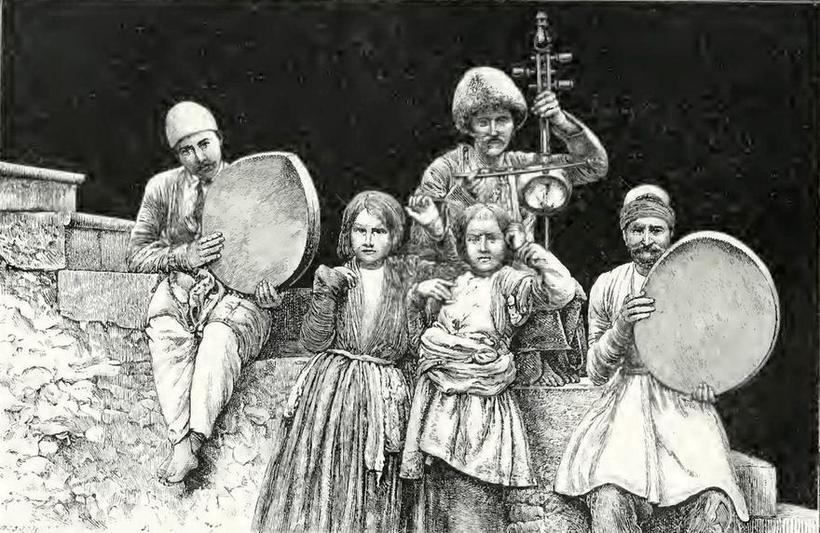
The Romani people of Europe migrated out of northwestern
India roughly a thousand years ago — this much is well established: their
language is Indo-Aryan, kin to Hindi and Punjabi. Some
scholars go further and hear Indian ancestry in flamenco —
in its rhythmic cycles, footwork and hand gestures carried via Romani
communities into Andalusia. Others regard flamenco as an essentially
Iberian synthesis with many parents. The migration is fact; the musical
genealogy is a live scholarly debate — a fascinating question rather than
a settled answer, and we present it as exactly that.
Romani musicians in a 19th-century engraving — a people whose language left India a thousand years ago. Image: Wikimedia Commons · more: the Romani people
A note on this page: the histories above compress a thousand
years of exchange, and every travelling tradition changed in its new home —
these art forms belong fully to the nations that practise them today, even as
they remember their Indian kinship. Photographs for this section are being
gathered; suggestions and corrections are welcome via the
contact page or
namaste.rasabharat@gmail.com.
This page is also available in ಕನ್ನಡ and हिन्दी.