Indian dance divides broadly into the classical traditions — codified,
text-rooted forms commonly counted as eight, each linked to the aesthetics of the
Natya Shastra — and a vast world of folk dances tied to harvests,
festivals, devotion and community life. Classical forms balance nritta (pure,
abstract dance), nritya (expressive dance) and natya (drama), using
mudras (hand gestures) and abhinaya (facial expression) to tell stories.
Codified traditions with formal grammar, dedicated training lineages
and recognition by the Sangeet Natak Akademi, India's national academy of the performing arts.
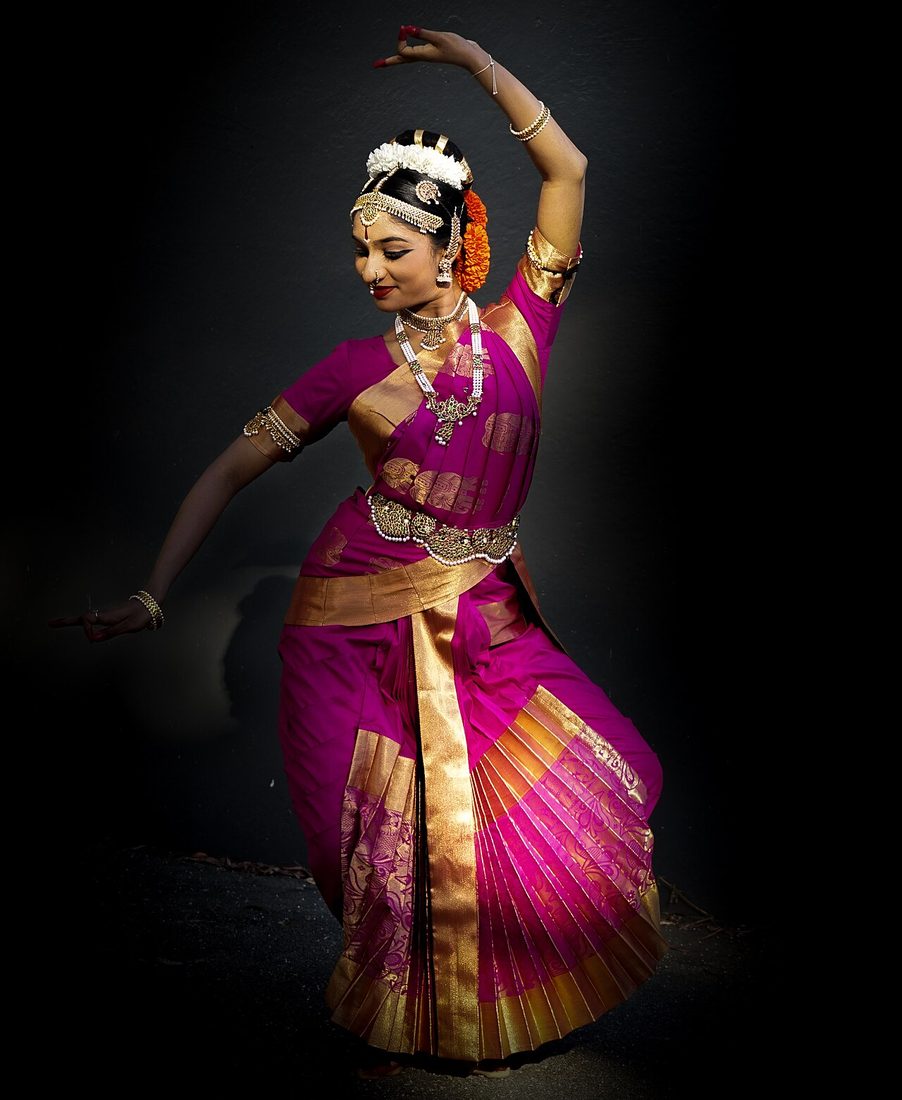
Bharatanatyam Tamil Nadu
South IndiaSolo tradition (now also group)Carnatic music
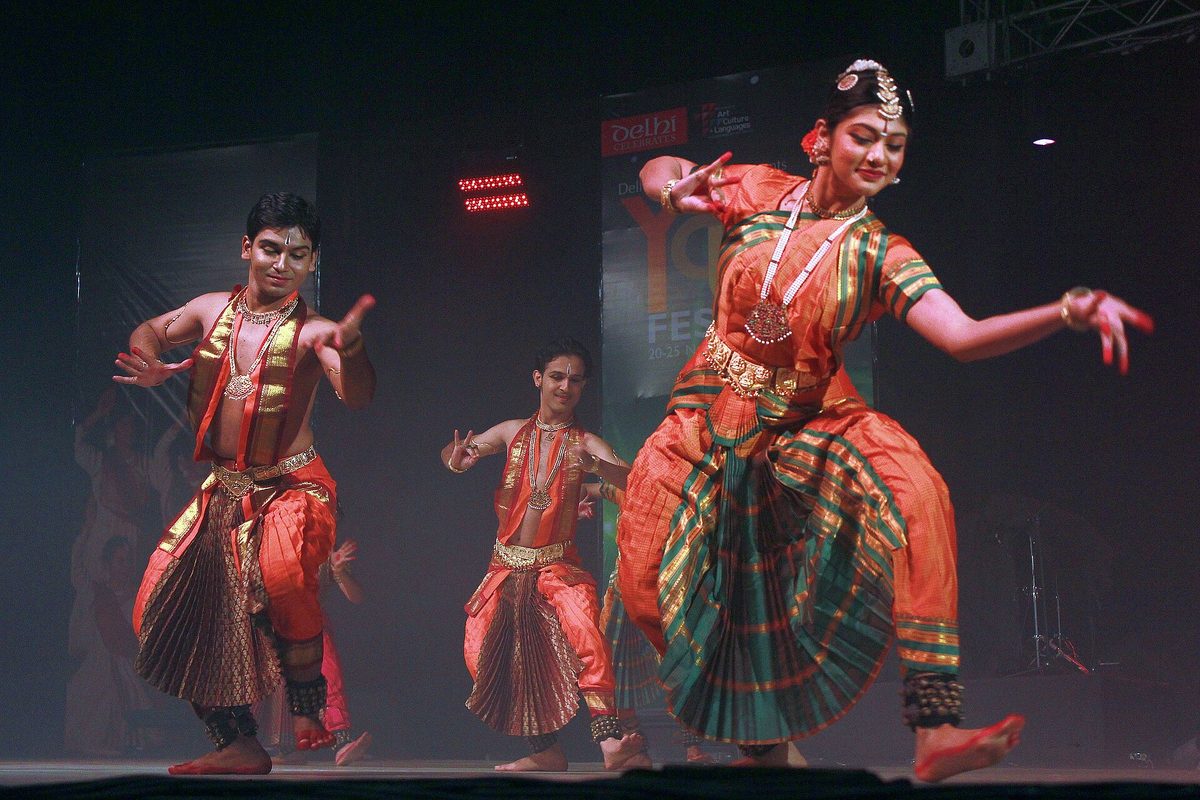
Bharatanatyam in ensemble performance.
Photo via Wikimedia Commons (author & licence on source page)
History
Bharatanatyam descends from the temple dance of Tamil Nadu performed for centuries by
devadasis (women dedicated to temple service), where it was known as
sadir. In the 19th century the "Thanjavur Quartet" — four brother-musicians at the
Thanjavur court — codified the concert repertoire still used today. After colonial-era
stigma and anti-dedication legislation nearly extinguished the art, reformers such as
E. Krishna Iyer and Rukmini Devi Arundale (founder of Kalakshetra, Chennai, 1936) revived
and re-staged it in the 20th century under its modern name.
Details & Technique
Built on the bent-knee stance araimandi, geometric lines, rhythmic footwork
units called adavus, and a rich gesture vocabulary. A traditional recital
(margam) moves through items such as alarippu, jatiswaram,
varnam (the centrepiece) and tillana, accompanied by Carnatic vocal
music, mridangam and nattuvangam (rhythmic syllables and cymbals).
Significance
By common scholarly description among the oldest codified classical dance traditions
of India, and now a global ambassador of Indian culture, taught on every continent.
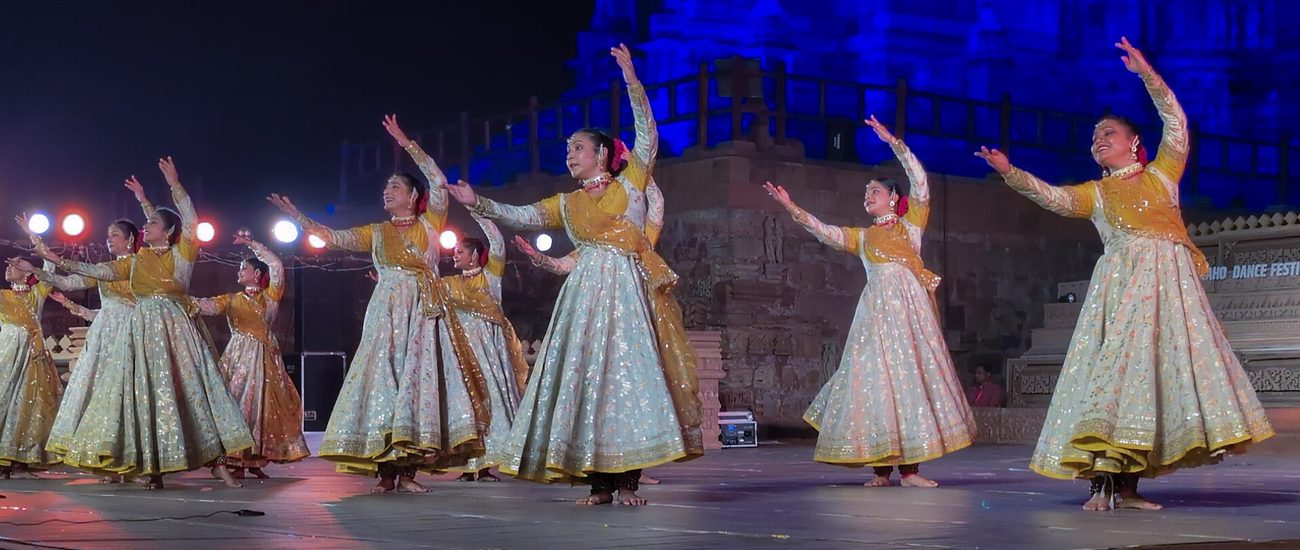
Kathak ensemble at the Khajuraho Dance Festival.
Photo via Wikimedia Commons (author & licence on source page)
History
Kathak takes its name from the kathakars — wandering storytellers who narrated
epics and legends of Krishna through gesture and song. In the Mughal era it entered royal
courts, absorbing Persian-influenced refinement, virtuosic footwork and spins. Three main
gharanas (stylistic lineages) crystallised: Lucknow (noted for expressive grace),
Jaipur (noted for rhythmic power) and Banaras.
Details & Technique
Signature elements include tatkar (rapid heelwork sounded through ghungroos — ankle bells whose number varies by training stage and tradition),
lightning chakkars (pirouettes), rhythmic dialogue with the tabla, and
gat-bhava storytelling. It is deeply intertwined with
Hindustani music, danced to teentaal and other rhythmic cycles.
Significance
A unique bridge of Hindu and Indo-Persian court cultures; its rhythm-play deeply
influenced Indian cinema choreography.
South India — KeralaDance-dramaElaborate makeup & costume
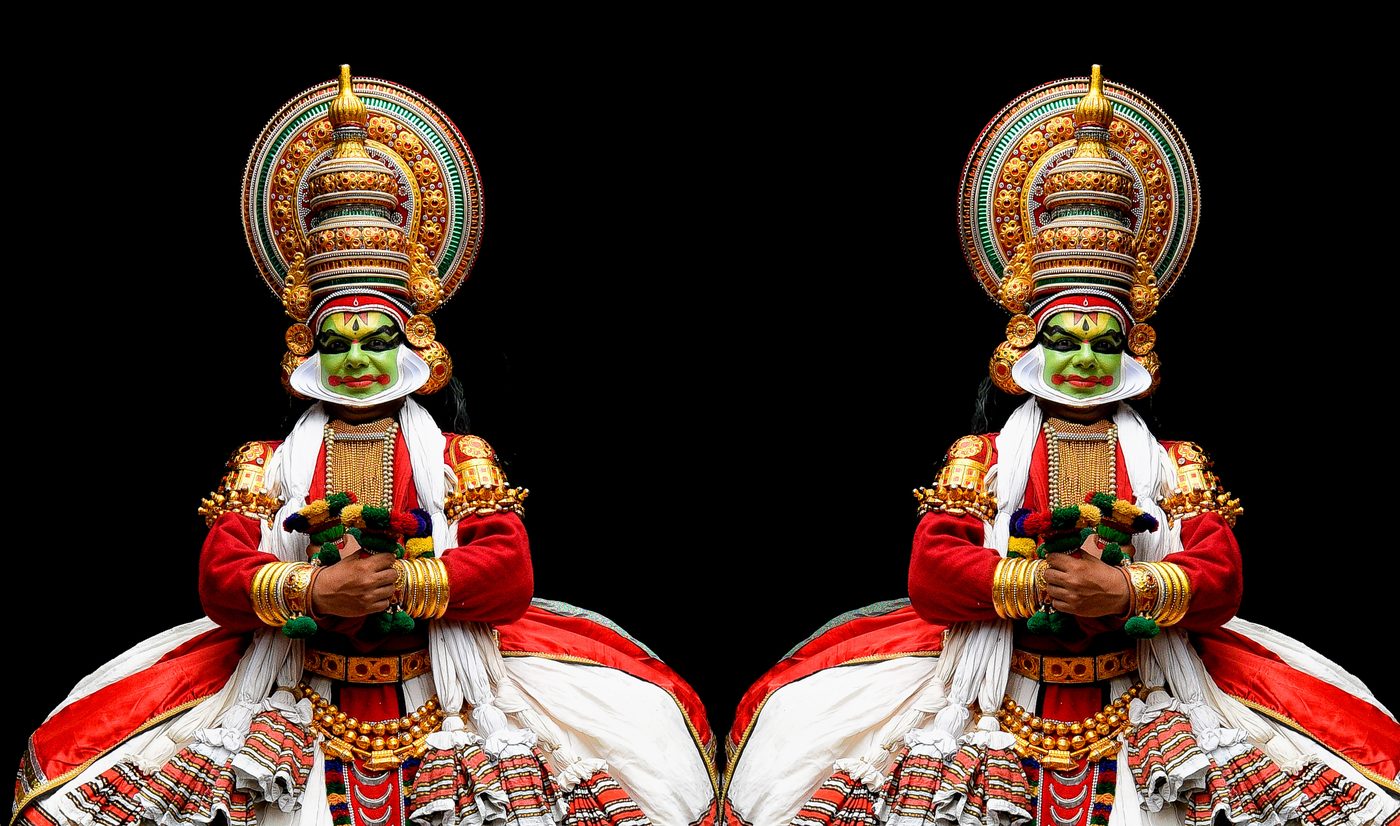
Kathakali performers in full vesham — costume, crown and painted face.
Photo: Lensmatter · Wikimedia Commons (licence on source page)
History
Kathakali ("story-play") took shape in Kerala around the 17th century, evolving from
earlier temple and martial traditions including Ramanattam and
Krishnanattam, with movement vocabulary influenced by the martial art
Kalaripayattu. The poet Vallathol Narayana Menon founded Kerala Kalamandalam
(1930), the institution that anchored its modern revival.
Details & Technique
All-night performances of episodes from the epics, traditionally by male troupes.
Characters are classified by elaborate painted makeup types — pacha (green, noble
heroes), kathi (anti-heroes), thadi (bearded), kari and
minukku — with towering headgear and billowing skirts. Actors "speak" entirely
through mudras and extraordinarily trained eye and facial muscles, to sung narration
accompanied by chenda and maddalam drums.
Significance
One of the world's most visually spectacular theatre forms and a defining emblem of
Kerala's culture.
A Kuchipudi pose.
Photo via Wikimedia Commons (author & licence on source page)
History
Named after the village of Kuchipudi in Andhra Pradesh's Krishna district, where
brahmin performing troupes staged devotional dance-dramas. Tradition credits the
16th–17th-century saint-poet Siddhendra Yogi with shaping the form and its signature
drama Bhama Kalapam. In the 20th century, gurus such as Vedantam Lakshminarayana
Sastry and Vempati Chinna Satyam refined it into a concert solo art as well.
Details & Technique
Combines fast, springy footwork with fluid grace and strong dramatic characterisation;
dancers traditionally speak or sing as characters. Its most famous virtuosic item is
tarangam, danced balancing on the rim of a brass plate, sometimes with a water
pot on the head.
Significance
Preserves the older dance-drama mode alongside the modern solo recital, and remains the
flagship classical art of the Telugu-speaking states.
East India — OdishaSculpturesque styleOdissi music
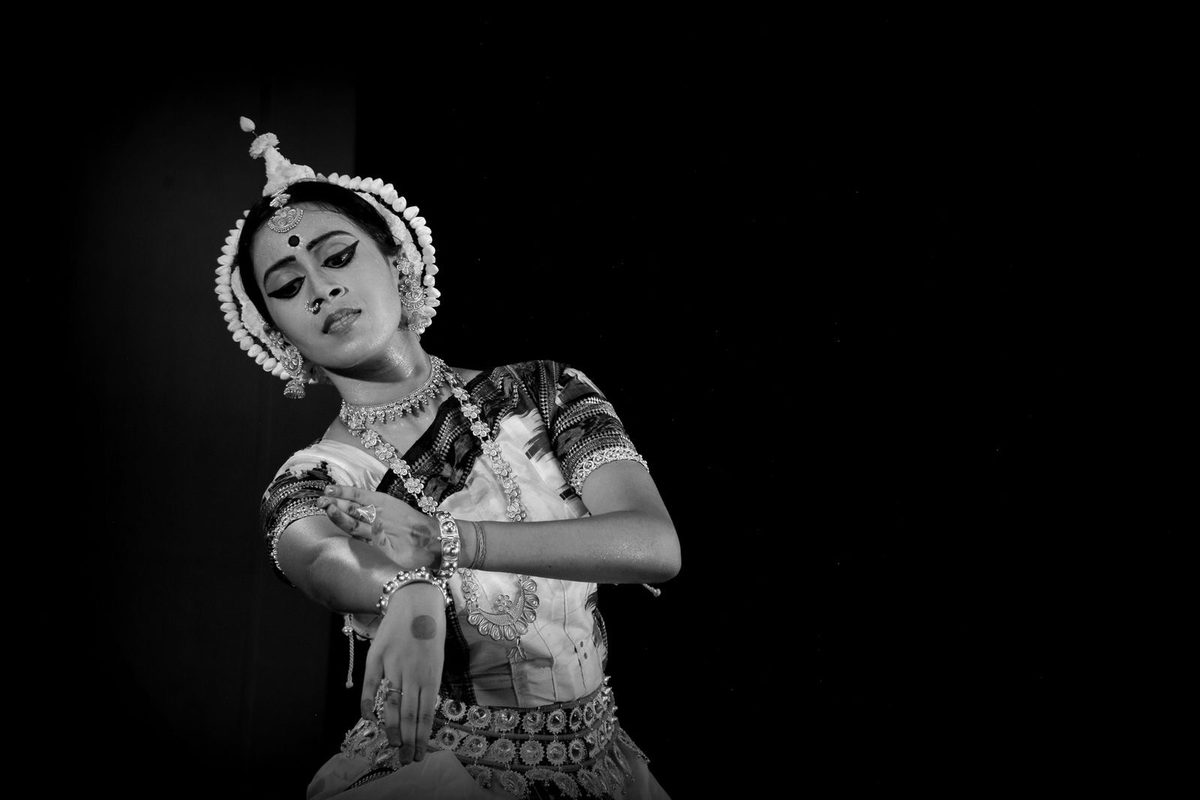
Odissi in performance.
Photo via Wikimedia Commons (author & licence on source page)
History
Rooted in the temple culture of Odisha — the maharis (temple dancers of the
Jagannath temple, Puri) and the gotipua tradition of boys dancing in female
costume. Sculptures at Konark and Bhubaneswar temples echo its poses, and the Odisha caves
at Udayagiri are often cited among the oldest performance-related sites in India. Nearly
lost by the mid-20th century, Odissi was reconstructed in the 1950s by gurus including
Kelucharan Mohapatra, Pankaj Charan Das and Deba Prasad Das.
Details & Technique
Famed for its sculptural quality: the tribhangi (three-bend) posture and the
square chauka stance associated with Lord Jagannath. Repertoire typically moves
from mangalacharan through pallavi (pure dance blossoming a raga) to
expressive abhinaya, often set to the 12th-century Sanskrit poem
Gita Govinda of Jayadeva.
Significance
A model case of 20th-century revival: rebuilt from temple sculpture, palm-leaf
manuscripts and surviving practitioners into one of the most lyrical classical styles.
Northeast India — ManipurDevotional — VaishnavGentle, rounded movement
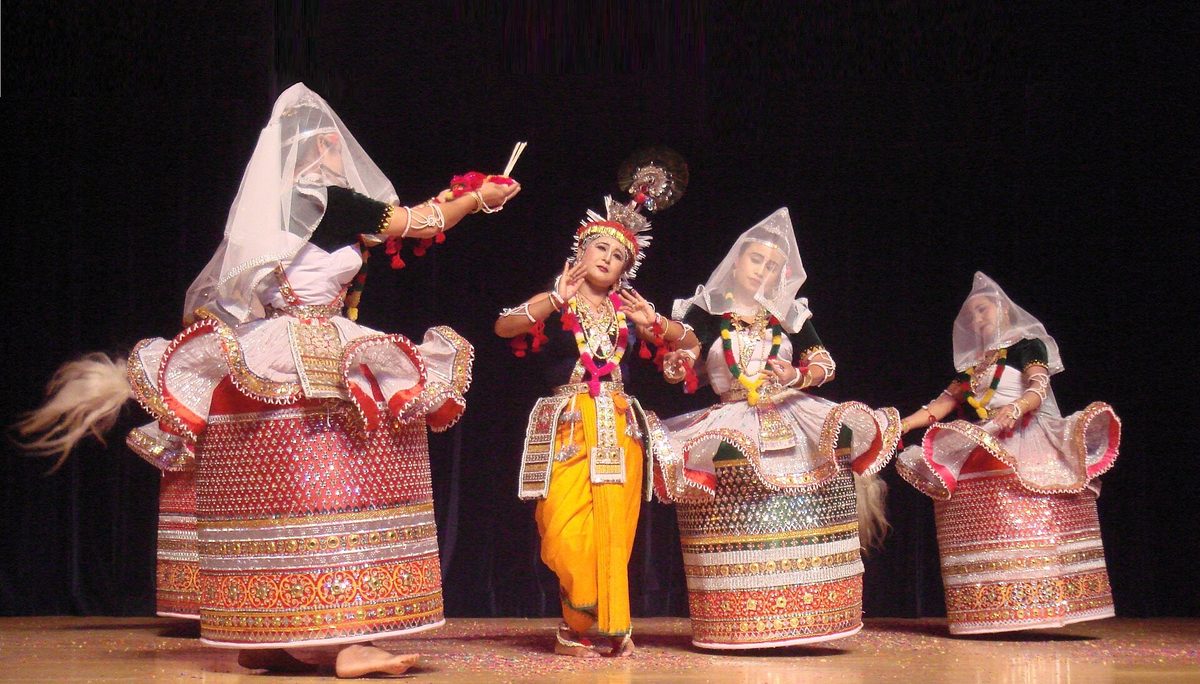
Ras Lila in the Manipuri style.
Photo via Wikimedia Commons (author & licence on source page)
History
Manipuri dance grows from the indigenous ritual tradition of Lai Haraoba and
flowered in its classical Ras Lila form after Vaishnavism became Manipur's court religion
in the 18th century, notably under King Bhagyachandra, credited with designing the
distinctive Ras costume. Rabindranath Tagore invited Manipuri gurus to Santiniketan in the
early 20th century, helping introduce the style to the rest of India.
Details & Technique
Characterised by soft, continuous, rounded movements with no sharp jerks or heavy
footwork — the dancer seems to float. Female Ras dancers wear the stiff, richly
embroidered barrel skirt (kumil) and translucent veil. The male drum-dance
Pung Cholom, in which drummers leap and spin while playing, is a celebrated
companion tradition; the related devotional singing-drumming form Sankirtana is
inscribed by UNESCO as Intangible Cultural Heritage.
Significance
A living fusion of pre-Vaishnav Meitei ritual and Krishna devotion, treated in Manipur
as worship rather than entertainment.
People: Guru Bipin Singh (systematiser and teacher),
the Jhaveri Sisters (Darshana, Nayana, Ranjana, Suverna), Guru Amubi Singh.
The "dance of Mohini" — the divine enchantress of Hindu mythology — is Kerala's
classical solo dance for women. It received notable patronage in the 19th century at the
Travancore court of Swathi Thirunal, declined under colonial-era disapproval, and was
revived in the 20th century through Kerala Kalamandalam, with gurus such as Kalamandalam
Kalyanikutty Amma shaping its modern repertoire.
Details & Technique
Emphasises lasya — graceful, swaying movement often compared to Kerala's palms
and backwaters — with a gentle up-and-down torso undulation, subtle abhinaya, and the
iconic white-and-gold kasavu costume with side-bun hairstyle. Music is Carnatic-based,
with compositions in Malayalam and Manipravalam.
Significance
Embodies a distinctly feminine aesthetic within the classical canon and carries
Kerala's lyric poetry tradition on stage.
People: Swathi Thirunal (patron-composer),
Kalamandalam Kalyanikutty Amma ("mother of Mohiniyattam"), Kanak Rele (dancer-scholar),
Bharati Shivaji.
Sattriya Assam
Northeast India — AssamMonastic originRecognised classical in 2000
History
Created in the 15th–16th centuries by the Assamese saint-reformer Srimanta Sankardev as
a vehicle of Vaishnav devotion, and preserved for five centuries inside the sattras
(monasteries) of Assam, especially on Majuli island. Monks performed it as daily ritual and
in Ankiya Naat (one-act devotional plays). The Sangeet Natak Akademi recognised
Sattriya as a classical dance in 2000 — the most recent addition to the canon.
Details & Technique
Includes both vigorous masculine and graceful feminine styles, danced to borgeet
(devotional songs composed by Sankardev and his disciple Madhavdev), the khol drum
and cymbals, in costumes of Assam's pat silk.
Significance
A rare example of a classical art preserved by a living monastic community rather than
courts or temples-with-dancers, now flourishing on the proscenium stage with women
performers as well.
People: Srimanta Sankardev (founder), Madhavdev
(composer-successor), and modern exponents recognised by the Sangeet Natak Akademi,
including Guru Jatin Goswami and Indira P. P. Bora.
Folk & Community Dances
A selection from among hundreds — every district of India has its
own dances of season, harvest, ritual and joy.
Bhangra & Giddha Punjab
PunjabHarvest — Baisakhi
Bhangra, the exuberant men's harvest dance of Punjab, is powered by the double-headed
dhol drum, leaping shoulder movements and joyous boliyan couplets;
Giddha is its sparkling women's counterpart of claps, satire and song. Once tied to the
Baisakhi harvest, Bhangra has become a global genre through the Punjabi diaspora, fusing
with hip-hop and electronic music while village and collegiate troupes keep the
traditional vocabulary alive.
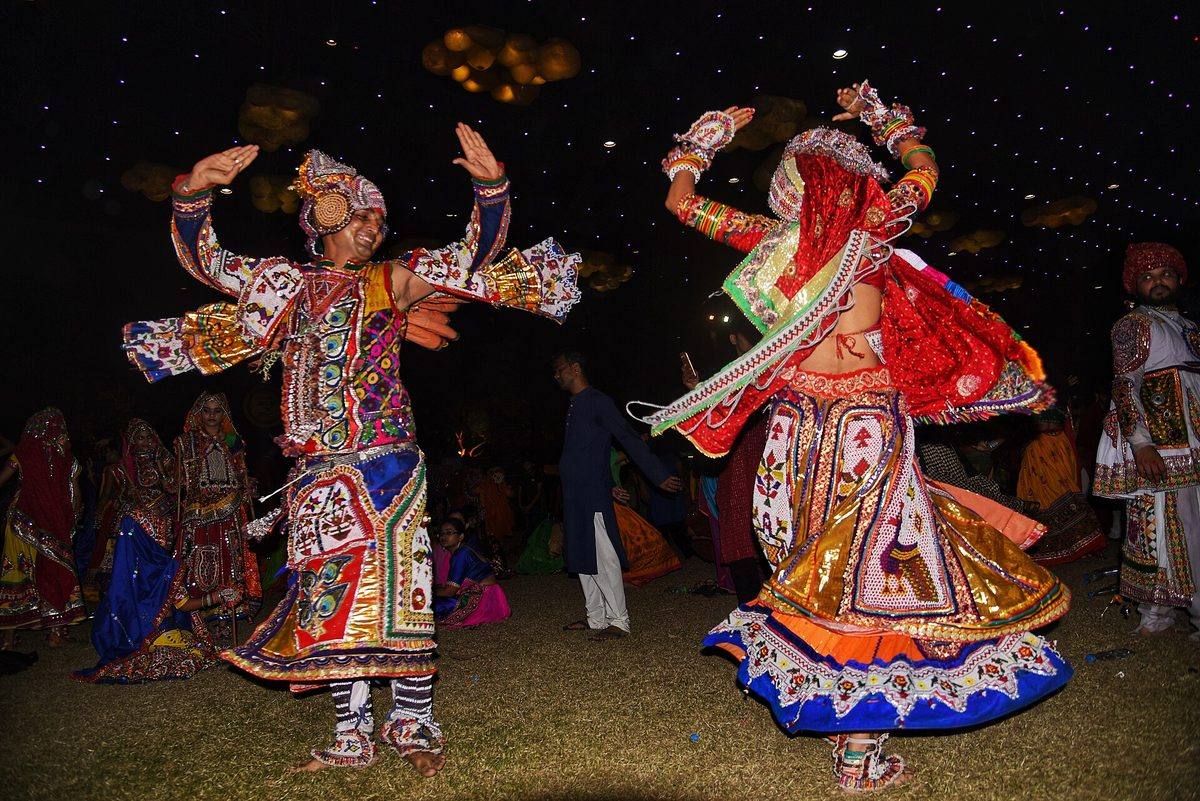
During the nine nights of Navratri, communities dance Garba in concentric circles
around a central lamp or image of the Goddess — the circle symbolising the cycle of time
with the divine at its still centre — and Dandiya Raas with clicking wooden sticks
recalling Krishna's raas and the Goddess's sword-play. Garba was inscribed on UNESCO's
Intangible Cultural Heritage list in 2023, and today fills stadiums from Ahmedabad to
New Jersey.
Ghoomar Rajasthan
RajasthanWomen's circle dance
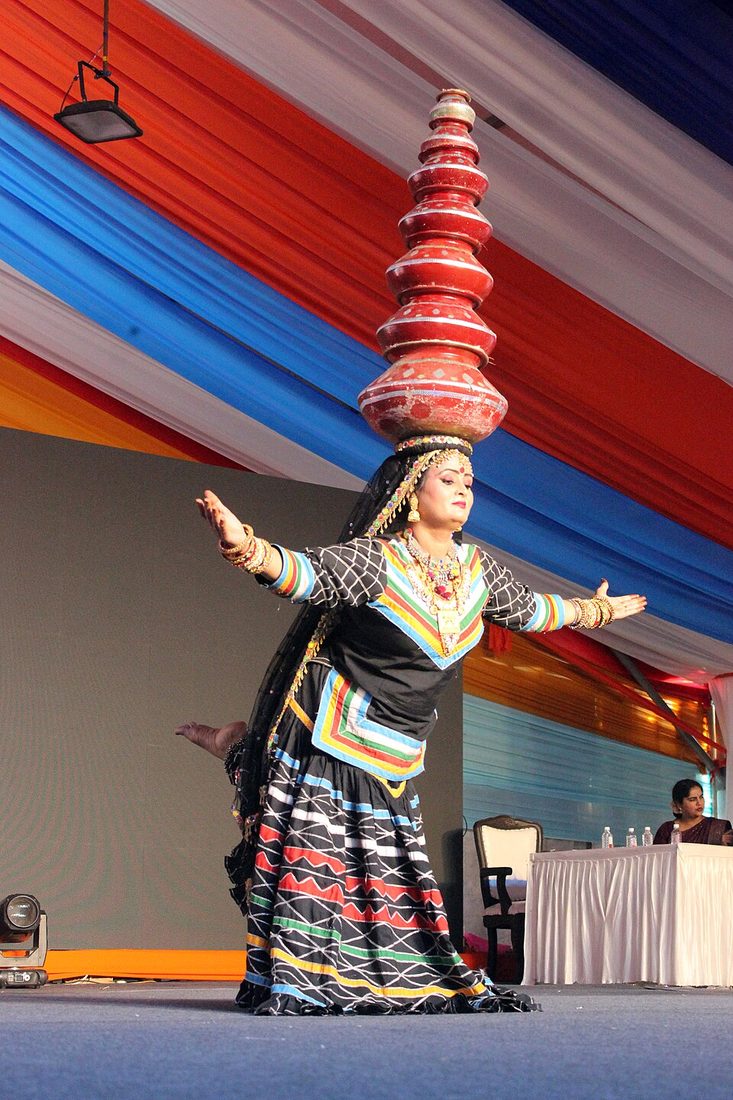
The swirling dance of Rajasthani women, traditionally associated with the Bhil
community and later the Rajput courts, performed on festive occasions in sweeping
ghaghara skirts whose pirouetting flare gives the dance its name (from
ghoomna, to twirl). Songs celebrate weddings, festivals and desert life; the
veiled dancers' measured spins make it one of India's most photographed folk forms.
A Kalbelia dancer at the Khajuraho Dance Festival.
Photo: Dwivedi · Wikimedia Commons (licence on source page)
The serpentine dance of the Kalbelia community, hereditary snake-charmers of the Thar
desert. Women in swirling black embroidered skirts mirror the movements of the cobra,
to the haunting reed drone of the pungi (been) and the rhythm of the
dholak and khanjari. UNESCO inscribed Kalbelia song and dance on its
Intangible Cultural Heritage list in 2010. Gulabo Sapera is its most celebrated modern
performer.
Lavani Maharashtra
MaharashtraDholki-driven
A powerful combination of song and dance performed to the beat of the dholki,
historically staged in tamasha folk theatre. Performed by women in nine-yard
saris, Lavani ranges from the devotional to the wittily sensual, and historically served
both as entertainment for weary soldiers and as sharp social commentary. Its rhythmic
intensity has heavily influenced Marathi cinema and stage.
A semi-classical martial dance-drama in three regional styles — Mayurbhanj (Odisha,
danced without masks), Seraikella (Jharkhand) and Purulia (West Bengal), the latter two
famous for their dramatic masks. Drawing on mock combat, bird-and-animal gaits and
episodes from the epics, Chhau is danced at the spring Chaitra Parva festival to drums
and mohuri. UNESCO inscribed Chhau on its Intangible Cultural Heritage list in 2010.
Bihu Assam
AssamSpring — Rongali Bihu
The dance of Assam's spring new-year festival (Rongali/Bohag Bihu), performed by young
men and women with brisk hip and arm movements to the dhol, the buffalo-horn
pepa and cymbals. Dancers wear golden muga silk; songs celebrate love, youth
and the awakening land. In 2023 a widely reported mass Bihu performance in Guwahati
earned a Guinness World Record — a moment of pride celebrated across Assam.
Dollu Kunitha Karnataka
KarnatakaDrum dance
Karnataka's thundering drum dance: performers carry the large barrel-shaped
dollu slung at the waist, beating it with sticks and palms while wheeling
through circles, weaves and acrobatic formations that grow faster and tighter as the
dance builds. Traditionally performed by the Kuruba community and associated with the
worship of Beereshwara (Beeralingeswara), it is today a fixture of festivals,
processions and the Mysuru Dasara — the sound carries across an entire village.
Kamsale Karnataka
Southern KarnatakaRitual dance — devotional
A devotional art of the devotees of Male Mahadeshwara, the deity of the M.M. Hills:
dancers sing the deity's epic ballads while striking the kamsale — a pair of
bronze cymbal-like discs — in flashing, rhythmic patterns that are dance, music and
worship at once. Traditionally learned as a hereditary devotional practice, it grows
from a simple seated bhajan style into spectacular whirling ensemble choreography, and
is now also staged by folk troupes across the state.
Veeragase Karnataka
KarnatakaVigorous — Shaiva tradition
A fierce, vigorous dance of Karnataka's Veerashaiva (Lingayat) tradition, enacting
the fury of Veerabhadra — the warrior born of Shiva's wrath. Dancers in Veerabhadra
costume, with painted brows and swords, perform to pounding drums and narrate the
Daksha-yajna story in bursts of leaping, stamping intensity. It is performed during
Dasara processions and temple festivals, often alongside Dollu Kunitha and Kamsale.
Kodava Dances of Kodagu (Coorg) Karnataka
Kodagu, KarnatakaCommunity & festival dances
The Kodava community of the Kodagu hills keeps its own distinct dance heritage,
performed at festivals such as Puttari (the rice harvest) and
Kailpodh: the graceful women's circle dance Ummathat, danced in
traditional dress around a lamp with small cymbals, and men's ceremonial dances
including Bolak-aat, performed with chowries and accompanied by traditional
drumming. Kodava dance, dress and festival culture form one of Karnataka's most
distinctive micro-traditions, maintained proudly by community associations at home and
across the diaspora.
Yakshagana Coastal Karnataka — see Theatre
KarnatakaDance-drama
Karnataka's great night-long dance-drama of blazing costumes and towering headdresses
is covered in full on the Theatre & Storytelling
page — as a dance-drama it lives where dance, music and acting meet. It belongs in
any picture of Karnataka's dance heritage, so consider this a signpost.
Rouf, Koli, Karagattam & the wider map across India
Pan-IndiaSelection
The folk map is inexhaustible: Kashmir's gentle women's line-dance Rouf at
Eid and harvest; Maharashtra's fisherfolk Koli dance with its oar-and-wave
motions; Tamil Nadu's Karagattam, balancing decorated water-pots in honour of
the rain goddess Mariamman; Telangana's revived warrior dance Perini Shivatandavam; the communal
stick dances and tribal circle dances of central and northeast India. Each deserves its
own study — this page is a doorway, not a census.
A note on accuracy: Origin stories of dance forms blend documented history
with tradition and legend; where a founder or date is traditional rather than proven (for
example Siddhendra Yogi for Kuchipudi), it is stated as such. Please verify specifics with
the Sangeet Natak Akademi and scholarly sources.
Content last reviewed: July 2026 · See Sources & References.