Painting & Visual Arts

चित्रकला — many ways of seeing the world

Indian painting runs in several parallel rivers: ancient murals on cave and temple walls; folk and tribal styles painted on floors, walls and cloth for ritual and festival; refined courtly miniatures; and the modern movements that carried Indian art into the global contemporary scene. Many folk styles now carry Geographical Indication (GI) protection.

❖ ❖ ❖
Madhubani-style peacock with fanned tail
Jump to: Ancient & Mural Folk & Tribal Courtly & Classical Modern

Ancient & Mural Traditions

Where Indian painting begins.

Bhimbetka Rock Art Madhya Pradesh

Central IndiaUNESCO World Heritage Site

The rock shelters of Bhimbetka preserve layer upon layer of prehistoric painting — hunting scenes, dancing figures, animals — with the oldest layers dated by scholars to many thousands of years ago (estimates vary widely; some cite roughly 10,000 years or more for the earliest paintings). They are the deepest visible root of Indian visual art and a UNESCO World Heritage Site (2003).
Ajanta & the Classical Mural Maharashtra

DeccanUNESCO World Heritage Site

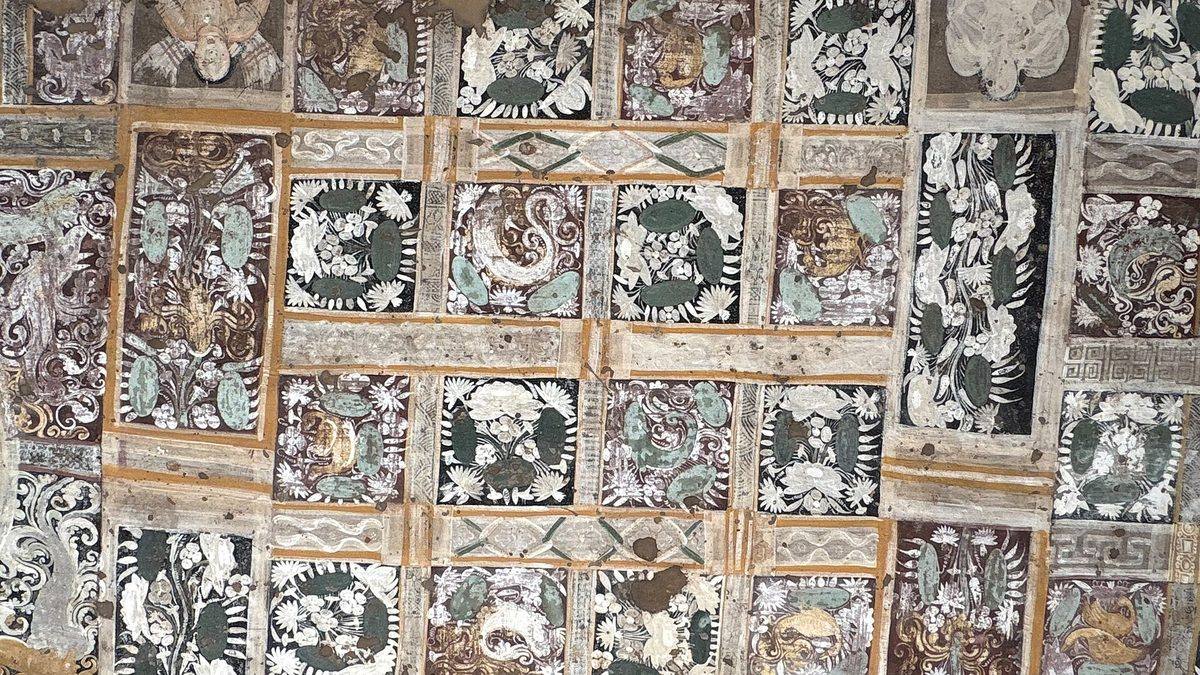
The Buddhist cave monasteries of Ajanta (broadly c. 2nd century BCE to 6th century CE) hold India's most celebrated ancient murals — serene bodhisattvas, jataka tales, courtly life — painted in mineral pigments with astonishing line and tenderness. Together with the murals of Bagh and later temple traditions, they set the canon of Indian figure painting that echoes through all later styles.

Kerala Mural Painting Kerala

KeralaTemple walls

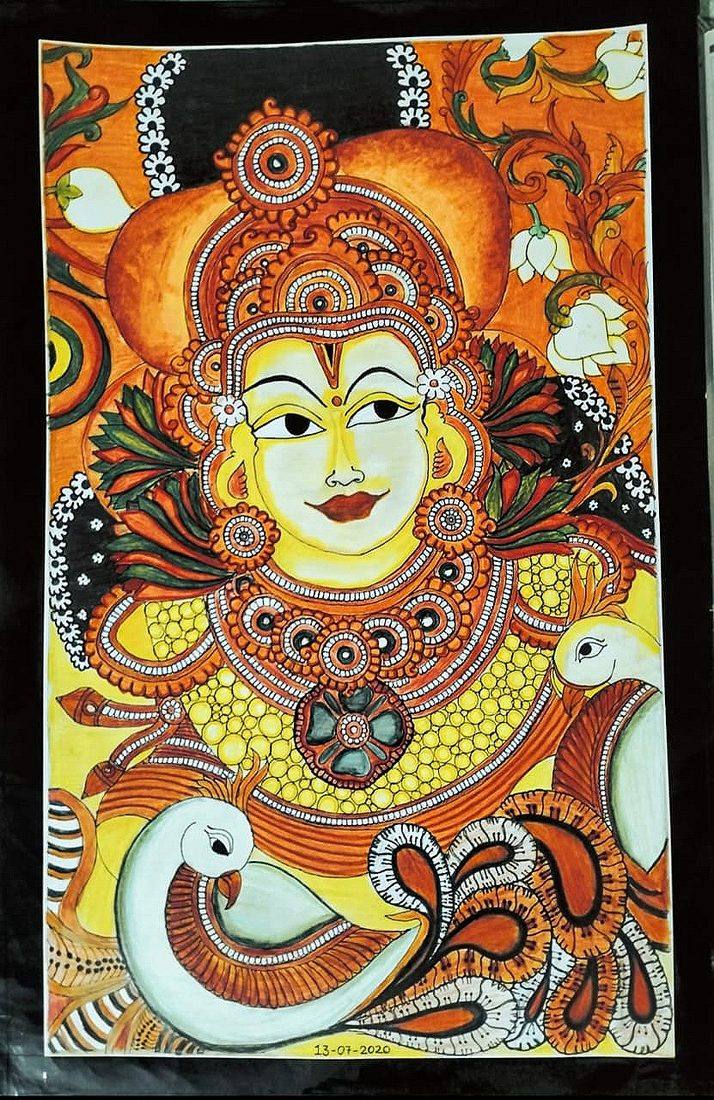
Kerala's temples and palaces (such as Mattancherry) carry a distinctive mural style — rounded, ornament-laden gods in a disciplined five-colour palette (panchavarna: red, yellow, green, black, white) from natural pigments. Rooted in medieval temple art and treatises on image-making, the style declined and was revived in the 20th century through institutional schools, and today thrives in both sacred and secular commissions.

Folk & Tribal Painting

Ritual art of home and village that the world now hangs in galleries.

Madhubani / Mithila Bihar

Bihar — Mithila regionGI-protected

The women of Mithila have long painted their courtyard and nuptial-chamber walls (kohbar) with gods, wedding symbols, fish, peacocks and the sun and moon, in line-dense compositions where no space is left empty. After a 1930s earthquake exposed the wall paintings to outside eyes, and especially after a 1960s drought-era initiative moved the art onto paper, Madhubani became a celebrated gallery art. Distinct styles (bharni's colour-filled figures, kachni's fine line) evolved with painters such as Sita Devi, Ganga Devi, Mahasundari Devi and Baua Devi earning national honours.

Warli Maharashtra

Maharashtra — Palghar beltTribal — Adivasi

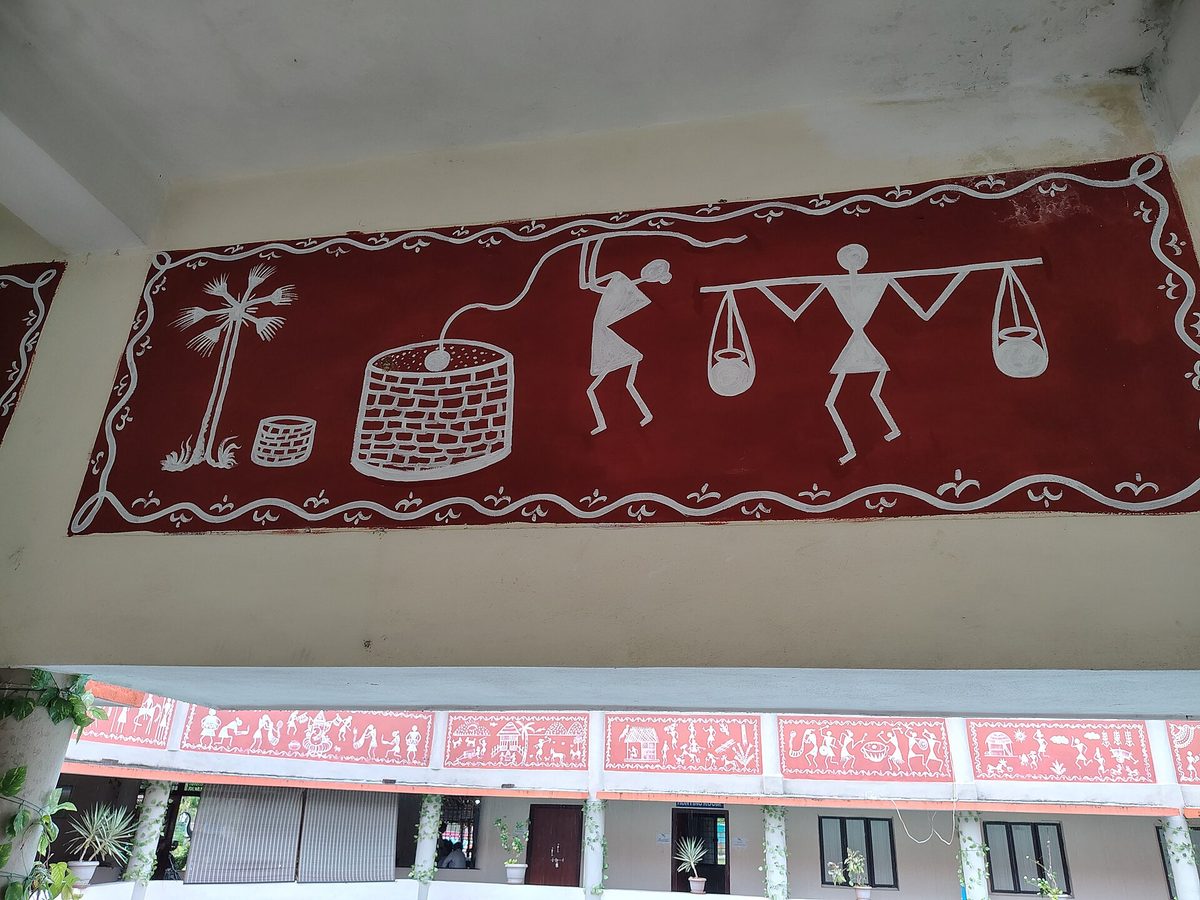
The Warli Adivasi community paints in white rice paste on earthen-red walls: circles, triangles and lines become sowing, harvest, weddings and the spiral tarpa dance around a musician. Ritual marriage paintings (chauk) are at its heart. Jivya Soma Mashe (Padma Shri) brought Warli to canvas and international fame in the 1970s while insisting on its living, sacred function.

Pattachitra Odisha & Bengal

Odisha (Raghurajpur) & West BengalGI-protected

"Cloth-picture" scroll and panel painting. Odisha's Pattachitra, centred on the artists' village of Raghurajpur near Puri, serves the Jagannath cult — intricate natural-pigment paintings with ornate borders, made on cloth stiffened with tamarind paste; painters also renew the temple's ritual imagery. Bengal's related patua scroll painters sing their scrolls (pater gaan) as they unroll them — painting and performance in one.

Gond Madhya Pradesh

Central IndiaTribal — Adivasi

The Gond, one of India's largest Adivasi communities, traditionally decorated walls and floors with clan deities, trees and animals. In the 1980s Jangarh Singh Shyam transformed the idiom into vivid acrylic works of dot-and-dash infill patterns — spawning a school (sometimes called "Jangarh Kalam") carried on by family and community artists such as Bhajju Shyam, whose The London Jungle Book became an international bestseller.

Phad & Pichwai Rajasthan

Rajasthan — Bhilwara & NathdwaraDevotional narrative

Phad paintings are long horizontal cloth scrolls of the hero-deities Pabuji and Devnarayan, carried village to village by Bhopa priest-singers who perform the epic before the lit scroll at night — a portable temple. The Joshi family of Bhilwara is its hereditary painter lineage. Pichwai paintings — large cloth backdrops hung behind the deity Shrinathji at Nathdwara — depict Krishna's festivals with lotus ponds and cows, and are now prized collector art.

Kalighat & Cheriyal Bengal & Telangana

Kolkata & TelanganaNarrative popular art

Kalighat painting arose in 19th-century Calcutta around the Kalighat temple: quick, bold watercolour images of gods — and sharp satires of colonial-era babus and social scandal — sold as pilgrim souvenirs; its sweeping brush line later influenced modern artists like Jamini Roy. Cheriyal scrolls of Telangana are bright narrative scroll paintings used by storyteller communities, with GI recognition, their red-background panels unrolling caste-purana epics scene by scene.

Courtly & Classical Styles

Ateliers of empire and temple towns.

Mughal Miniature 16th–18th century courts

North IndiaPersian-Indian synthesis

Under Akbar, Jahangir and Shah Jahan, imperial workshops fused Persian refinement with Indian observation into jewel-like manuscript painting: dynastic chronicles (Akbarnama), natural-history studies of birds and animals, and portraiture of unprecedented realism. Master painters include Basawan, Daswanth, Ustad Mansur (Jahangir's wildlife painter, honoured as "Nadir al-Asr") and Abu'l Hasan. The atelier system dispersed with the empire — seeding the regional courts.

Rajput & Pahari Miniatures Rajasthan & the Punjab Hills

Rajasthan & HimachalDevotion & romance

The Hindu courts painted devotion and poetry: Mewar's bold epic pages, Bundi-Kota's lush hunts, Kishangarh's elongated, lyrical Radha (the famous "Bani Thani" image associated with painter Nihal Chand), Bikaner, Jaipur and more. In the Punjab hills, the Pahari schools — Basohli's hot intensity mellowing into Guler-Kangra's tender naturalism (with the painter dynasty of Pandit Seu, Manaku and Nainsukh) — produced some of India's most loved paintings: the Gita Govinda, ragamala (raga-as-picture) series and Krishna's rain-washed idylls.

Tanjore & Mysore Painting Tamil Nadu & Karnataka

South IndiaGold-leaf iconic artGI-protected (Thanjavur)

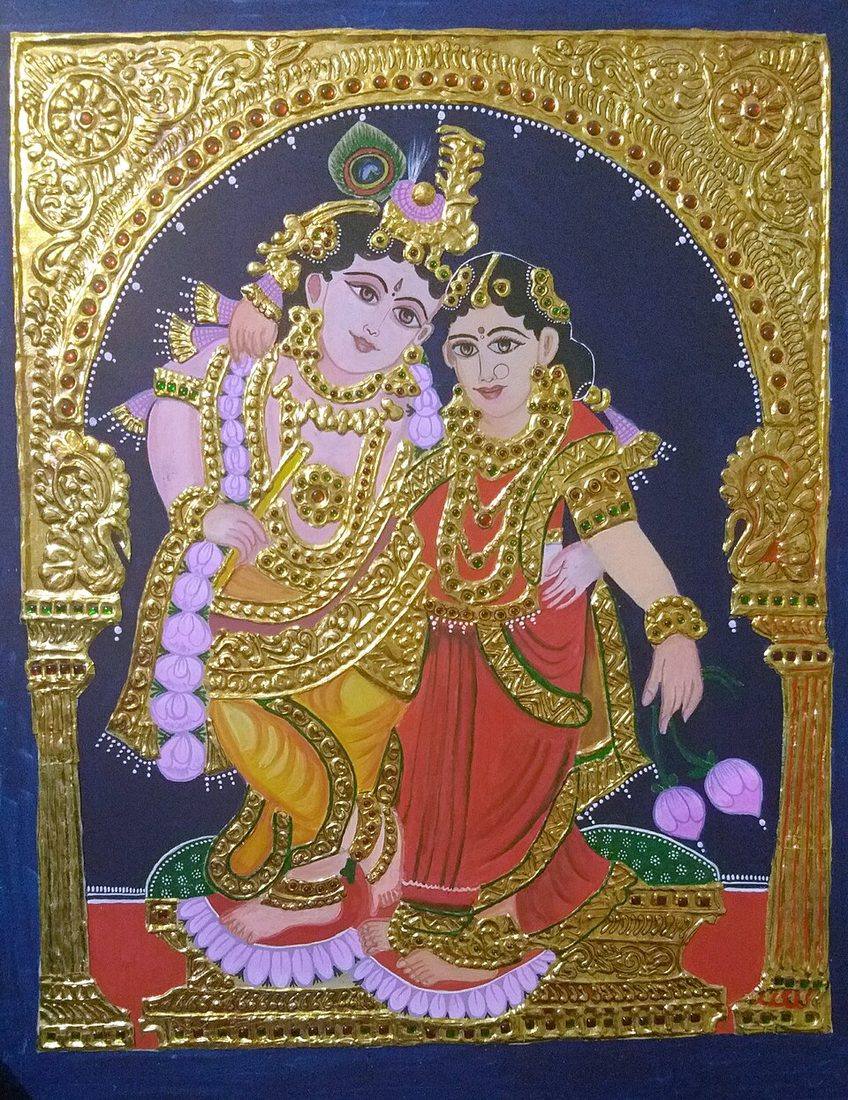
Flourishing from the Maratha court of Thanjavur (17th–19th centuries), Tanjore painting creates densely adorned icons of deities — gesso relief work covered with gold leaf and set with glass gems, radiating temple opulence. The related Mysore school favours finer line, softer palette and delicate gold work. Both remain living devotional arts, made for shrine rooms as much as for collectors.

Kalamkari Andhra Pradesh

Srikalahasti & MachilipatnamPen-drawn textile art

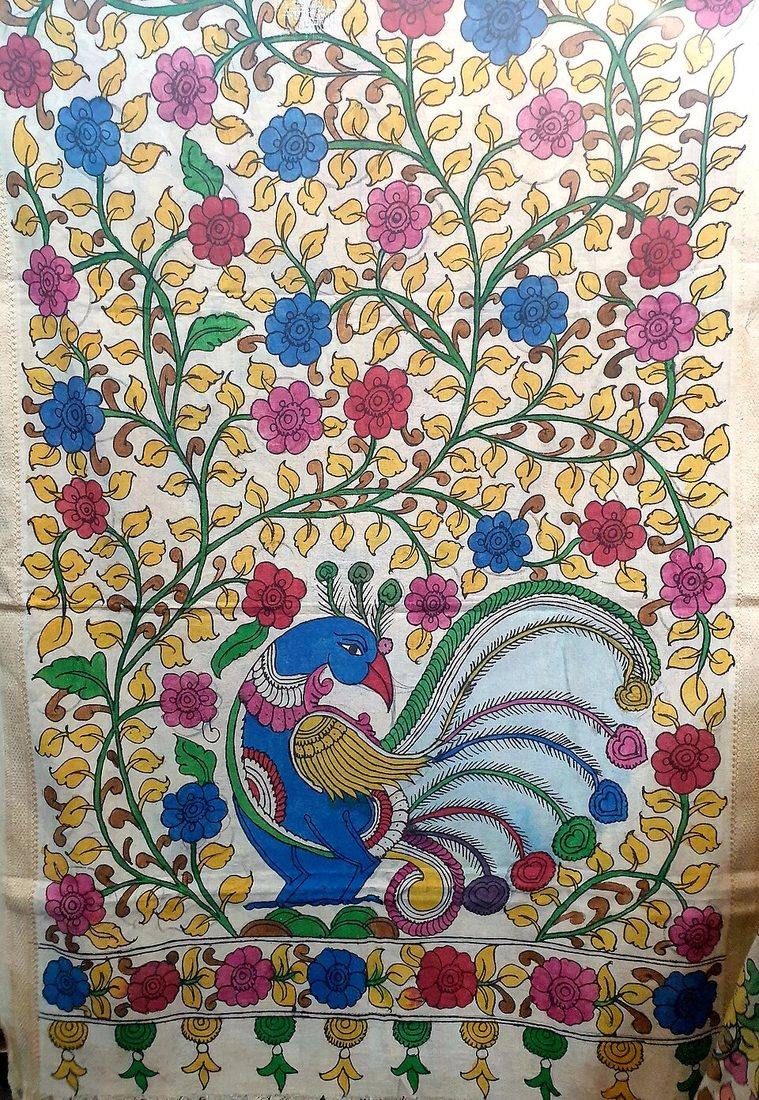
"Pen-craft" — narrative drawing on cotton with a bamboo kalam and natural dyes (myrobalan, madder, iron-black), fixed through elaborate mordant washing. The Srikalahasti style draws temple epics freehand for shrine hangings; the Machilipatnam style uses block-printing with hand-painted detail and historically clothed a huge export trade of Indian chintz that reshaped world textile fashion in the 17th–18th centuries.

Modern & Contemporary Movements

From colonial academies to global biennales.

Raja Ravi Varma & the Academic Turn Kerala, 19th century

Oil painting & oleographs

Raja Ravi Varma (1848–1906) of Travancore mastered European oil technique and applied it to Indian gods and epic heroines — then mass-produced his images through his own lithographic press, putting Lakshmi and Saraswati on the walls of ordinary homes and permanently shaping popular Hindu iconography. Praised and criticised in turn, he remains the pivot between traditional and modern Indian art.

The Bengal School Calcutta & Santiniketan

Nationalist revival

Reacting against colonial academic art, Abanindranath Tagore and his circle (with E. B. Havell's support) forged a "wash technique" style drawing on Mughal-Pahari miniatures and East Asian art — his Bharat Mata became a nationalist icon. Nandalal Bose carried the movement to Santiniketan, linked art to Gandhi's national movement (his Haripura poster-panels are celebrated), and trained a generation; Jamini Roy turned instead to Kalighat-folk simplicity, and Amrita Sher-Gil (1913–1941) fused Parisian modernism with Ajanta's grace in luminous paintings of Indian life.

Progressive Artists' Group & After Bombay, 1947 onward

Indian modernism

Founded in Bombay in the year of Independence, the Progressive Artists' Group — F. N. Souza, S. H. Raza, M. F. Husain, K. H. Ara and colleagues — declared Indian art's entry into international modernism on its own terms: Raza's later geometric bindu meditations, Husain's galloping horses and epic series, Souza's fierce figuration. Alongside them stand V. S. Gaitonde's luminous abstraction, Tyeb Mehta, Akbar Padamsee, K. G. Subramanyan and, among women artists, Arpita Singh and Nalini Malani — the bridge to today's thriving contemporary scene and events like the Kochi-Muziris Biennale.

A note on accuracy: Datings of prehistoric and ancient sites (Bhimbetka, Ajanta) follow broad scholarly ranges and remain subjects of research. GI-protection and UNESCO statuses mentioned reflect widely reported listings — verify current status with official registries. Content last reviewed: July 2026 · See Sources & References.